

10.1: Cancer
- Page ID
- 165634

\( \newcommand{\vecs}[1]{\overset { \scriptstyle \rightharpoonup} {\mathbf{#1}} } \)
\( \newcommand{\vecd}[1]{\overset{-\!-\!\rightharpoonup}{\vphantom{a}\smash {#1}}} \)
\( \newcommand{\dsum}{\displaystyle\sum\limits} \)
\( \newcommand{\dint}{\displaystyle\int\limits} \)
\( \newcommand{\dlim}{\displaystyle\lim\limits} \)
\( \newcommand{\id}{\mathrm{id}}\) \( \newcommand{\Span}{\mathrm{span}}\)
( \newcommand{\kernel}{\mathrm{null}\,}\) \( \newcommand{\range}{\mathrm{range}\,}\)
\( \newcommand{\RealPart}{\mathrm{Re}}\) \( \newcommand{\ImaginaryPart}{\mathrm{Im}}\)
\( \newcommand{\Argument}{\mathrm{Arg}}\) \( \newcommand{\norm}[1]{\| #1 \|}\)
\( \newcommand{\inner}[2]{\langle #1, #2 \rangle}\)
\( \newcommand{\Span}{\mathrm{span}}\)
\( \newcommand{\id}{\mathrm{id}}\)
\( \newcommand{\Span}{\mathrm{span}}\)
\( \newcommand{\kernel}{\mathrm{null}\,}\)
\( \newcommand{\range}{\mathrm{range}\,}\)
\( \newcommand{\RealPart}{\mathrm{Re}}\)
\( \newcommand{\ImaginaryPart}{\mathrm{Im}}\)
\( \newcommand{\Argument}{\mathrm{Arg}}\)
\( \newcommand{\norm}[1]{\| #1 \|}\)
\( \newcommand{\inner}[2]{\langle #1, #2 \rangle}\)
\( \newcommand{\Span}{\mathrm{span}}\) \( \newcommand{\AA}{\unicode[.8,0]{x212B}}\)
\( \newcommand{\vectorA}[1]{\vec{#1}} % arrow\)
\( \newcommand{\vectorAt}[1]{\vec{\text{#1}}} % arrow\)
\( \newcommand{\vectorB}[1]{\overset { \scriptstyle \rightharpoonup} {\mathbf{#1}} } \)
\( \newcommand{\vectorC}[1]{\textbf{#1}} \)
\( \newcommand{\vectorD}[1]{\overrightarrow{#1}} \)
\( \newcommand{\vectorDt}[1]{\overrightarrow{\text{#1}}} \)
\( \newcommand{\vectE}[1]{\overset{-\!-\!\rightharpoonup}{\vphantom{a}\smash{\mathbf {#1}}}} \)
\( \newcommand{\vecs}[1]{\overset { \scriptstyle \rightharpoonup} {\mathbf{#1}} } \)
\(\newcommand{\longvect}{\overrightarrow}\)
\( \newcommand{\vecd}[1]{\overset{-\!-\!\rightharpoonup}{\vphantom{a}\smash {#1}}} \)
\(\newcommand{\avec}{\mathbf a}\) \(\newcommand{\bvec}{\mathbf b}\) \(\newcommand{\cvec}{\mathbf c}\) \(\newcommand{\dvec}{\mathbf d}\) \(\newcommand{\dtil}{\widetilde{\mathbf d}}\) \(\newcommand{\evec}{\mathbf e}\) \(\newcommand{\fvec}{\mathbf f}\) \(\newcommand{\nvec}{\mathbf n}\) \(\newcommand{\pvec}{\mathbf p}\) \(\newcommand{\qvec}{\mathbf q}\) \(\newcommand{\svec}{\mathbf s}\) \(\newcommand{\tvec}{\mathbf t}\) \(\newcommand{\uvec}{\mathbf u}\) \(\newcommand{\vvec}{\mathbf v}\) \(\newcommand{\wvec}{\mathbf w}\) \(\newcommand{\xvec}{\mathbf x}\) \(\newcommand{\yvec}{\mathbf y}\) \(\newcommand{\zvec}{\mathbf z}\) \(\newcommand{\rvec}{\mathbf r}\) \(\newcommand{\mvec}{\mathbf m}\) \(\newcommand{\zerovec}{\mathbf 0}\) \(\newcommand{\onevec}{\mathbf 1}\) \(\newcommand{\real}{\mathbb R}\) \(\newcommand{\twovec}[2]{\left[\begin{array}{r}#1 \\ #2 \end{array}\right]}\) \(\newcommand{\ctwovec}[2]{\left[\begin{array}{c}#1 \\ #2 \end{array}\right]}\) \(\newcommand{\threevec}[3]{\left[\begin{array}{r}#1 \\ #2 \\ #3 \end{array}\right]}\) \(\newcommand{\cthreevec}[3]{\left[\begin{array}{c}#1 \\ #2 \\ #3 \end{array}\right]}\) \(\newcommand{\fourvec}[4]{\left[\begin{array}{r}#1 \\ #2 \\ #3 \\ #4 \end{array}\right]}\) \(\newcommand{\cfourvec}[4]{\left[\begin{array}{c}#1 \\ #2 \\ #3 \\ #4 \end{array}\right]}\) \(\newcommand{\fivevec}[5]{\left[\begin{array}{r}#1 \\ #2 \\ #3 \\ #4 \\ #5 \\ \end{array}\right]}\) \(\newcommand{\cfivevec}[5]{\left[\begin{array}{c}#1 \\ #2 \\ #3 \\ #4 \\ #5 \\ \end{array}\right]}\) \(\newcommand{\mattwo}[4]{\left[\begin{array}{rr}#1 \amp #2 \\ #3 \amp #4 \\ \end{array}\right]}\) \(\newcommand{\laspan}[1]{\text{Span}\{#1\}}\) \(\newcommand{\bcal}{\cal B}\) \(\newcommand{\ccal}{\cal C}\) \(\newcommand{\scal}{\cal S}\) \(\newcommand{\wcal}{\cal W}\) \(\newcommand{\ecal}{\cal E}\) \(\newcommand{\coords}[2]{\left\{#1\right\}_{#2}}\) \(\newcommand{\gray}[1]{\color{gray}{#1}}\) \(\newcommand{\lgray}[1]{\color{lightgray}{#1}}\) \(\newcommand{\rank}{\operatorname{rank}}\) \(\newcommand{\row}{\text{Row}}\) \(\newcommand{\col}{\text{Col}}\) \(\renewcommand{\row}{\text{Row}}\) \(\newcommand{\nul}{\text{Nul}}\) \(\newcommand{\var}{\text{Var}}\) \(\newcommand{\corr}{\text{corr}}\) \(\newcommand{\len}[1]{\left|#1\right|}\) \(\newcommand{\bbar}{\overline{\bvec}}\) \(\newcommand{\bhat}{\widehat{\bvec}}\) \(\newcommand{\bperp}{\bvec^\perp}\) \(\newcommand{\xhat}{\widehat{\xvec}}\) \(\newcommand{\vhat}{\widehat{\vvec}}\) \(\newcommand{\uhat}{\widehat{\uvec}}\) \(\newcommand{\what}{\widehat{\wvec}}\) \(\newcommand{\Sighat}{\widehat{\Sigma}}\) \(\newcommand{\lt}{<}\) \(\newcommand{\gt}{>}\) \(\newcommand{\amp}{&}\) \(\definecolor{fillinmathshade}{gray}{0.9}\)By the end of this section, you will be able to do the following:
- Explain why cancer is considered a collection of diseases rather than a single disease.
- Describe how inherited and acquired DNA mutations contribute to the development of cancer.
- Distinguish between benign and malignant tumors and explain how metastasis contributes to cancer severity.
- Describe how environmental exposures and lifestyle factors can increase the likelihood of DNA mutations that may lead to cancer.
When people hear the word cancer, they often picture a single disease with a clear cause. But cancer is not a single disease—it is a category that includes many related conditions. What all cancers have in common is that they begin when the regulatory systems that normally control how and when cells divide break down. In other words, cancer is a disease of gene regulation gone wrong. Whether it arises in lung tissue, breast tissue, or the colon, cancer begins when the genetic instructions that normally keep cell growth in check are altered.
Those genetic instructions are stored in DNA. Genes are segments of DNA that contain the instructions for making proteins, many of which help regulate when cells grow, divide, repair damage, or die. When the DNA sequence of a gene changes, the protein it produces may no longer function properly. If enough mutations affect genes that control cell growth, normal regulation can break down and cancer may develop. Because proteins perform most of the work inside a cell, mutations that alter important proteins can change how cells behave. Mutations affecting proteins involved in cell growth, DNA repair, or cell death are especially important in the development of cancer.
These disruptions are usually caused by mutations—changes in the DNA sequence of genes involved in cell cycle regulation, DNA repair, or cellular identity. Most mutations that lead to cancer are acquired during a person's lifetime rather than inherited. They can result from external factors like smoking, ultraviolet (UV) light, indoor tanning, certain chemicals called carcinogens, or certain viruses, but they can also arise spontaneously when the cell makes mistakes during DNA replication.
Carcinogens are physical, chemical, or biological agents that increase the likelihood that DNA will become damaged or mutated. For example, ultraviolet (UV) radiation from sunlight or tanning beds can damage DNA in skin cells, while chemicals in tobacco smoke can damage DNA in lung cells. Some viruses can also contribute to cancer by disrupting normal cellular processes or promoting long-term inflammation. Although cells possess sophisticated DNA repair systems that continuously detect and repair damaged DNA, not all damage is successfully repaired. Over time, unrepaired DNA damage can accumulate as mutations, increasing the risk that a normal cell will become cancerous.
In rare cases, individuals inherit mutations in key regulatory genes, which increases their risk of developing cancer—but even in those cases, additional mutations over time are needed for cancer to develop.
It is important to recognize that most cancers do not result from a single mutation. Instead, they develop after multiple mutations gradually accumulate in the same cell over many years. This helps explain why the risk of many cancers increases with age and why lifestyle choices that reduce DNA damage—such as avoiding tobacco products, limiting excessive sun exposure, and receiving recommended vaccines against cancer-causing viruses—can lower cancer risk.
Cancer causing microbes
Although cancer is most often associated with inherited or acquired DNA mutations, some microorganisms can also contribute to cancer development. These microorganisms generally do not "cause" cancer directly. Instead, they increase the likelihood that cancer will develop by damaging DNA, disrupting normal gene regulation, or promoting chronic inflammation.
Certain viruses, such as human papillomavirus (HPV) and hepatitis B virus (HBV), can increase the risk of cancer by introducing changes that disrupt normal gene regulation or by promoting chronic inflammation. For example, persistent HPV infection can lead to cervical cancer, while chronic HBV infection increases the risk of liver cancer. These viruses alter the normal behavior of infected cells, allowing mutations to accumulate more readily over time.
Approximately 15–20% of cancers worldwide are associated with infectious agents. In later chapters, you will learn how viruses and other microorganisms interact with host cells and how some of these interactions can contribute to diseases such as cancer.
Most cancers therefore result from the gradual accumulation of somatic mutations - DNA mutations acquired throughout a person's lifetime rather than from a single mutation or inherited genetic condition. This is why the risk of many cancers increases with age—the longer we live, the more opportunities there are for mutations to accumulate in our cells.
Can DNA Mutations Help Explain Why We Age?
Every day, the cells in your body acquire small changes in their DNA called somatic mutations. These mutations are not inherited from your parents. Instead, they arise throughout life as cells divide or when DNA is damaged by factors such as ultraviolet (UV) radiation, chemicals in tobacco smoke, or simply by the normal processes of cellular metabolism. Most of these mutations are harmless, and many are repaired before they can cause problems. However, some persist and gradually accumulate over time.
Scientists have long known that somatic mutations play a major role in the development of cancer. More recently, researchers have begun asking a broader question:
Could the gradual accumulation of DNA mutations also contribute to the aging process?
To investigate this question, researchers developed a mathematical model that estimated how long humans might live if every known hallmark of aging could somehow be eliminated except the accumulation of somatic mutations. Their model suggested that mutations alone could still limit the median human lifespan to approximately 146–194 years, with the exact value depending on the assumptions of the model. The study also found that organs such as the brain and heart, whose cells are rarely replaced, may be more vulnerable to the long-term accumulation of mutations than tissues such as the liver, where damaged cells can be replaced more readily.
It is important to understand what this study does—and does not—show. The researchers were not predicting that humans will someday routinely live for 150 to 200 years. Instead, they used a theoretical model to estimate the contribution of one biological process—the accumulation of somatic mutations—to aging. Their results suggest that DNA mutations are an important contributor to aging, but they are only one of many biological processes involved. Other hallmarks of aging, including changes in mitochondria, protein homeostasis, epigenetics, and cellular communication, also play important roles.
This study highlights an important theme in both cancer biology and aging research: our DNA is continually changing throughout life. Most mutations never cause disease, but a small number can alter how cells function. In some cells, these mutations may contribute to cancer. Across many cells and tissues over decades, they may also contribute to the gradual decline associated with aging. Understanding how mutations accumulate—and how cells repair DNA damage—is an active area of research that could one day lead to new strategies for preventing disease and promoting healthy aging.
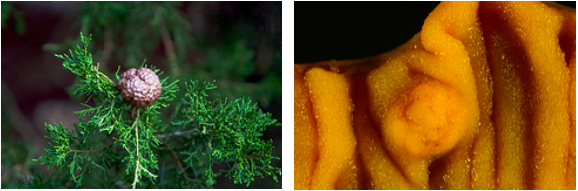
Although the word tumor is often used interchangeably with cancer, not all tumors are cancerous. A tumor is simply a mass of cells that forms when cells divide more than they should or fail to die when they normally would (Figure \(\PageIndex{1}\)). While tumors often result from mutations that disrupt the normal regulation of cell growth, not every tumor becomes cancerous. When a mutation occurs in a gene that normally limits cell division, those controls can be lost, and the affected cell begins dividing more rapidly. If the resulting tumor stays in one place, grows slowly, and is enclosed in a protective sheath, it is considered a benign tumor. However, if additional mutations accumulate that affect genes regulating cell adhesion, motility, or growth signals, the tumor may become malignant. Malignant tumors grow faster, invade surrounding tissues, and can eventually metastasize, spreading through the bloodstream or lymphatic system to distant parts of the body. This gradual progression from a benign growth to an invasive cancer illustrates that cancer typically develops through multiple genetic changes rather than a single mutation.
From a cellular perspective, cancer cells look and behave very differently from healthy cells, largely due to failures in the cellular control systems that regulate growth and division. Normally, cell division is tightly controlled by a network of signals that includes input from neighboring cells and internal checkpoints that monitor DNA integrity. In adult tissues, contact inhibition is one such regulatory mechanism—it prevents cells from dividing once they sense they are surrounded. But cancer cells often carry mutations in genes that override this inhibition. As a result, they continue dividing even when they shouldn’t, forming dense piles of cells when grown in a lab dish. (Figure \(\PageIndex{2}\)) This loss of contact inhibition is one of several characteristics that distinguish cancer cells from normal healthy cells.

In a developing embryo, cells begin identical and become specialized for certain functions through a process called differentiation. Differentiation is controlled by changes in gene expression that allow different genes to be turned on or off depending on a cell's function. As cells become specialized, they turn on specific sets of genes needed for their roles—for example, muscle cells activate muscle-specific genes, while liver cells turn on genes for detoxification. In cancer, this regulatory program is disrupted.
In cancer, this regulatory program is disrupted. Cancer cells often lose many of the characteristics that make them specialized. Instead, they behave more like immature cells that continue dividing, ignore signals that normally limit growth, and are better able to invade surrounding tissues. This loss of specialization contributes to the aggressive behavior seen in many cancers.
Because cancer is caused by multiple genetic changes, it tends to develop gradually. Scientists often track the mutations involved in different types of cancers. These studies have shown that cancer usually develops through a series of mutations rather than from a single genetic change. One well-studied example is colon cancer, which tends to follow a relatively predictable path involving multiple mutations over time (Figure \(\PageIndex{3}\)). In the early stages, mutations may arise in a gene called APC, which normally helps regulate the cell cycle. As additional mutations accumulate—such as in RAS, DCC, TP53, and PRL3—the risk of developing a full-blown, invasive cancer increases.
Each of these genes plays a different role in keeping cells in check. Some normally promote division only when it's appropriate, while others act more like brakes, preventing division when the DNA is damaged or the cell is too old. You can think of these genes as the accelerator and brake pedals of a car. Healthy cells need both systems working together to carefully regulate growth. When the accelerator gets stuck or the brakes fail, the result is uncontrolled growth. As additional mutations accumulate, more of the normal safeguards that regulate cell growth are lost, allowing cells to divide uncontrollably and eventually become invasive. This will be further discussed in the next few sections.

It’s important to remember that even cancers in the same tissue type can look very different at the molecular level. Two people with breast cancer might have tumors caused by mutations in completely different genes. As a result, one treatment might work for one person but not the other. By identifying the specific genetic changes within a tumor, doctors can select treatments that are more likely to be effective for that individual patient. This approach, known as personalized medicine (or precision medicine), has become a major focus of modern cancer research and therapy. Advances in DNA sequencing and biotechnology now allow physicians to identify many of the mutations present in a patient's tumor, helping guide treatment decisions and improve outcomes.
Ultimately, cancer is a disease of failed cellular regulation that begins with changes in DNA. As mutations accumulate over time, they disrupt the genes responsible for controlling cell growth, DNA repair, differentiation, and cell survival. Eventually, the normal systems that maintain healthy tissues can no longer function properly, allowing cancer cells to grow, invade surrounding tissues, and sometimes spread throughout the body. Understanding the mechanisms behind this disease not only helps us treat it more effectively, but also deepens our appreciation of how healthy cells cooperate to keep our bodies functioning. In the following sections, we will examine the specific genes and molecular pathways that regulate the cell cycle and explore how mutations in these pathways drive cancer development.
Summary
Cancer is a disease caused by the accumulation of mutations in DNA that disrupt the normal regulation of cell growth, division, and survival. Genes are segments of DNA that provide instructions for making proteins, and mutations can alter how these proteins function. Most cancer-causing mutations are acquired during a person's lifetime through normal DNA replication errors or exposure to environmental factors such as ultraviolet radiation, tobacco smoke, certain microorganisms, and other carcinogens, although some people inherit mutations that increase their risk of developing cancer. Because cancer usually results from multiple mutations that accumulate over many years, it develops gradually rather than from a single genetic change. Cancer cells lose normal growth controls, become less specialized, and may invade surrounding tissues or spread to distant organs through metastasis. Because the specific genetic changes vary between individuals and cancer types, treatment is increasingly tailored to the molecular characteristics of each tumor.
Key Terms
- acquired mutation (somatic mutation)
- a mutation that develops during a person's lifetime in a particular cell and is not inherited from a parent
- benign tumor
- a non-invasive, localized tumor that grows slowly
- cancer
- a collection of diseases involving uncontrolled cell division due to genetic mutations
- carcinogen
- a physical, chemical, or biological agent that increases the risk of cancer by damaging DNA or increasing the likelihood of mutations
- contact inhibition
- a regulatory mechanism that stops normal cells from dividing once they fill available space
- de-differentiation
- the process by which cancer cells lose their specialized features and become more primitive
- differentiation
- the process by which cells become specialized for specific functions
- DNA damage
- physical or chemical changes to DNA that can lead to mutations if not properly repaired by the cell
- DNA repair
- the collection of cellular mechanisms that detect and repair damaged DNA, helping maintain the integrity of the genome
- gene regulation
- the process by which cells control when and how strongly genes are expressed, allowing different cell types to perform specialized functions
- inherited mutation (germline mutation)
- a mutation passed from parent to child that is present in nearly every cell of the body
- malignant tumor
- a cancerous tumor that invades surrounding tissues and can metastasize
- metastasis
- the spread of cancer cells from the original site to distant tissues via the blood or lymphatic system
- mutation
- a change in the DNA sequence that can affect gene function
- personalized medicine
- an approach to healthcare that uses the genetic characteristics of a patient's disease to guide prevention, diagnosis, or treatment
- regulatory gene
- a gene whose protein product helps control important cellular processes such as cell growth, DNA repair, differentiation, or cell death
- somatic mutations
- a change in the DNA of a body cell that happens after conception, meaning it affects only the individual and cannot be passed on to their children
- tumor
- a mass of abnormally growing cells; may be benign or malignant