

24: Hypersensitivites
- Page ID
- 144227

\( \newcommand{\vecs}[1]{\overset { \scriptstyle \rightharpoonup} {\mathbf{#1}} } \)
\( \newcommand{\vecd}[1]{\overset{-\!-\!\rightharpoonup}{\vphantom{a}\smash {#1}}} \)
\( \newcommand{\dsum}{\displaystyle\sum\limits} \)
\( \newcommand{\dint}{\displaystyle\int\limits} \)
\( \newcommand{\dlim}{\displaystyle\lim\limits} \)
\( \newcommand{\id}{\mathrm{id}}\) \( \newcommand{\Span}{\mathrm{span}}\)
( \newcommand{\kernel}{\mathrm{null}\,}\) \( \newcommand{\range}{\mathrm{range}\,}\)
\( \newcommand{\RealPart}{\mathrm{Re}}\) \( \newcommand{\ImaginaryPart}{\mathrm{Im}}\)
\( \newcommand{\Argument}{\mathrm{Arg}}\) \( \newcommand{\norm}[1]{\| #1 \|}\)
\( \newcommand{\inner}[2]{\langle #1, #2 \rangle}\)
\( \newcommand{\Span}{\mathrm{span}}\)
\( \newcommand{\id}{\mathrm{id}}\)
\( \newcommand{\Span}{\mathrm{span}}\)
\( \newcommand{\kernel}{\mathrm{null}\,}\)
\( \newcommand{\range}{\mathrm{range}\,}\)
\( \newcommand{\RealPart}{\mathrm{Re}}\)
\( \newcommand{\ImaginaryPart}{\mathrm{Im}}\)
\( \newcommand{\Argument}{\mathrm{Arg}}\)
\( \newcommand{\norm}[1]{\| #1 \|}\)
\( \newcommand{\inner}[2]{\langle #1, #2 \rangle}\)
\( \newcommand{\Span}{\mathrm{span}}\) \( \newcommand{\AA}{\unicode[.8,0]{x212B}}\)
\( \newcommand{\vectorA}[1]{\vec{#1}} % arrow\)
\( \newcommand{\vectorAt}[1]{\vec{\text{#1}}} % arrow\)
\( \newcommand{\vectorB}[1]{\overset { \scriptstyle \rightharpoonup} {\mathbf{#1}} } \)
\( \newcommand{\vectorC}[1]{\textbf{#1}} \)
\( \newcommand{\vectorD}[1]{\overrightarrow{#1}} \)
\( \newcommand{\vectorDt}[1]{\overrightarrow{\text{#1}}} \)
\( \newcommand{\vectE}[1]{\overset{-\!-\!\rightharpoonup}{\vphantom{a}\smash{\mathbf {#1}}}} \)
\( \newcommand{\vecs}[1]{\overset { \scriptstyle \rightharpoonup} {\mathbf{#1}} } \)
\(\newcommand{\longvect}{\overrightarrow}\)
\( \newcommand{\vecd}[1]{\overset{-\!-\!\rightharpoonup}{\vphantom{a}\smash {#1}}} \)
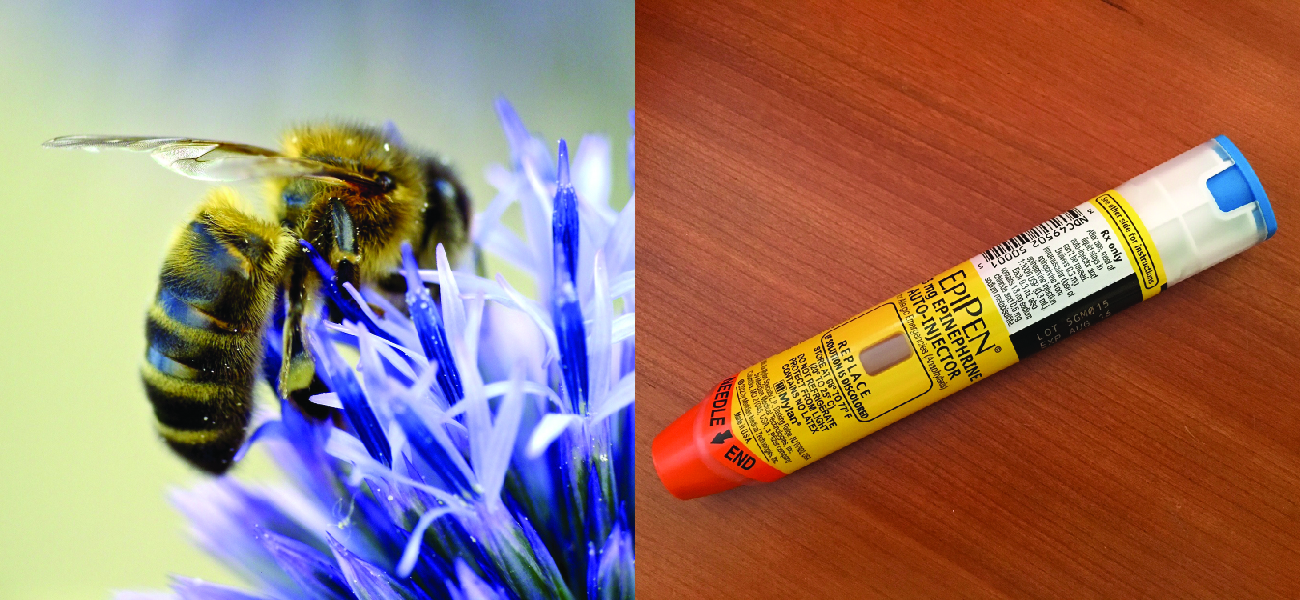
\(\newcommand{\avec}{\mathbf a}\) \(\newcommand{\bvec}{\mathbf b}\) \(\newcommand{\cvec}{\mathbf c}\) \(\newcommand{\dvec}{\mathbf d}\) \(\newcommand{\dtil}{\widetilde{\mathbf d}}\) \(\newcommand{\evec}{\mathbf e}\) \(\newcommand{\fvec}{\mathbf f}\) \(\newcommand{\nvec}{\mathbf n}\) \(\newcommand{\pvec}{\mathbf p}\) \(\newcommand{\qvec}{\mathbf q}\) \(\newcommand{\svec}{\mathbf s}\) \(\newcommand{\tvec}{\mathbf t}\) \(\newcommand{\uvec}{\mathbf u}\) \(\newcommand{\vvec}{\mathbf v}\) \(\newcommand{\wvec}{\mathbf w}\) \(\newcommand{\xvec}{\mathbf x}\) \(\newcommand{\yvec}{\mathbf y}\) \(\newcommand{\zvec}{\mathbf z}\) \(\newcommand{\rvec}{\mathbf r}\) \(\newcommand{\mvec}{\mathbf m}\) \(\newcommand{\zerovec}{\mathbf 0}\) \(\newcommand{\onevec}{\mathbf 1}\) \(\newcommand{\real}{\mathbb R}\) \(\newcommand{\twovec}[2]{\left[\begin{array}{r}#1 \\ #2 \end{array}\right]}\) \(\newcommand{\ctwovec}[2]{\left[\begin{array}{c}#1 \\ #2 \end{array}\right]}\) \(\newcommand{\threevec}[3]{\left[\begin{array}{r}#1 \\ #2 \\ #3 \end{array}\right]}\) \(\newcommand{\cthreevec}[3]{\left[\begin{array}{c}#1 \\ #2 \\ #3 \end{array}\right]}\) \(\newcommand{\fourvec}[4]{\left[\begin{array}{r}#1 \\ #2 \\ #3 \\ #4 \end{array}\right]}\) \(\newcommand{\cfourvec}[4]{\left[\begin{array}{c}#1 \\ #2 \\ #3 \\ #4 \end{array}\right]}\) \(\newcommand{\fivevec}[5]{\left[\begin{array}{r}#1 \\ #2 \\ #3 \\ #4 \\ #5 \\ \end{array}\right]}\) \(\newcommand{\cfivevec}[5]{\left[\begin{array}{c}#1 \\ #2 \\ #3 \\ #4 \\ #5 \\ \end{array}\right]}\) \(\newcommand{\mattwo}[4]{\left[\begin{array}{rr}#1 \amp #2 \\ #3 \amp #4 \\ \end{array}\right]}\) \(\newcommand{\laspan}[1]{\text{Span}\{#1\}}\) \(\newcommand{\bcal}{\cal B}\) \(\newcommand{\ccal}{\cal C}\) \(\newcommand{\scal}{\cal S}\) \(\newcommand{\wcal}{\cal W}\) \(\newcommand{\ecal}{\cal E}\) \(\newcommand{\coords}[2]{\left\{#1\right\}_{#2}}\) \(\newcommand{\gray}[1]{\color{gray}{#1}}\) \(\newcommand{\lgray}[1]{\color{lightgray}{#1}}\) \(\newcommand{\rank}{\operatorname{rank}}\) \(\newcommand{\row}{\text{Row}}\) \(\newcommand{\col}{\text{Col}}\) \(\renewcommand{\row}{\text{Row}}\) \(\newcommand{\nul}{\text{Nul}}\) \(\newcommand{\var}{\text{Var}}\) \(\newcommand{\corr}{\text{corr}}\) \(\newcommand{\len}[1]{\left|#1\right|}\) \(\newcommand{\bbar}{\overline{\bvec}}\) \(\newcommand{\bhat}{\widehat{\bvec}}\) \(\newcommand{\bperp}{\bvec^\perp}\) \(\newcommand{\xhat}{\widehat{\xvec}}\) \(\newcommand{\vhat}{\widehat{\vvec}}\) \(\newcommand{\uhat}{\widehat{\uvec}}\) \(\newcommand{\what}{\widehat{\wvec}}\) \(\newcommand{\Sighat}{\widehat{\Sigma}}\) \(\newcommand{\lt}{<}\) \(\newcommand{\gt}{>}\) \(\newcommand{\amp}{&}\) \(\definecolor{fillinmathshade}{gray}{0.9}\)An allergic reaction is an immune response to a type of antigen called an allergen. Allergens can be found in many different items, from peanuts and insect stings to latex and some drugs. Unlike other kinds of antigens, allergens are not necessarily associated with pathogenic microbes, and many allergens provoke no immune response at all in most people.
Allergic responses vary in severity. Some are mild and localized, like hay fever or hives, but others can result in systemic, life-threatening reactions. Anaphylaxis, for example, is a rapidly developing allergic reaction that can cause a dangerous drop in blood pressure and severe swelling of the throat that may close off the airway.
Allergies are just one example of how the immune system—the system normally responsible for preventing disease—can actually cause or mediate disease symptoms. In this chapter, we will further explore allergies and other hypersensitivity reactions.
- 24.1: Type I Hypersensitivities
- This page discusses hypersensitivity reactions, specifically Type I, characterized by IgE antibodies causing rapid allergic responses to allergens. It also introduces the hygiene hypothesis, linking reduced microbial exposure in clean environments to increased allergies and immune disorders in children. Proposed by David Strachan, it highlights a correlation between larger family sizes and fewer allergies, contrasting modern children’s lower microbial challenges with past generations.
- 24.2: Type II Hypersensitivities
- This page covers the ABO blood group system and Type II hypersensitivities, including hemolytic transfusion reactions (HTR) and hemolytic disease of the newborn (HDN). It stresses the importance of blood type matching to prevent adverse reactions. HTR results from incompatible transfused blood, while HDN occurs when maternal antibodies attack fetal red blood cells. The Rh factor is highlighted as a significant component, with Rh incompatibility leading to serious outcomes.
- 24.3: Type III Hypersensitivities
- This page discusses Type III hypersensitivity, marked by immune-complex reactions due to excess antibodies, particularly IgG. This leads to small immune complexes depositing in tissues, causing inflammation and issues like localized hemorrhage (Arthus reaction) and systemic responses (serum sickness), affecting areas like kidneys and joints. Symptoms include fever and rash. Autoimmune diseases may also involve these reactions.
- 24.4: Type IV Hypersensitivities
- This page explains Type IV hypersensitivity, mediated by T cells, with three subtypes: CD4 TH1-mediated (delayed-type reactions like tuberculin tests), CD4 TH2-mediated (linked to asthma and allergic rhinitis), and CD8 CTL-mediated (involving tissue rejection and apoptosis). It also covers historical aspects and methods for tuberculosis testing related to this hypersensitivity type.
- 24.5: Hypersensitivity Pneumonitis and Summary
- This page discusses hypersensitivity pneumonitis (HP), an occupational disease caused by allergic reactions to inhaled allergens like dust and molds. It involves lung inflammation and symptoms such as coughing and dyspnea, linked to type III and IV hypersensitivities. Different forms of HP, such as "poultry worker's lung," showcase its occupational ties. Symptoms can develop rapidly and may become chronic if not treated.
- 24.6: Diagnosis and Treatment of Hypersensitivities
- This page covers the diagnosis and treatment of hypersensitivity reactions. Type I is diagnosed through skin tests, while Type III presents diagnostic challenges. Treatments vary, with severe reactions requiring emergency epinephrine and milder ones managed by antihistamines. Type IV involves T-cell activation and shares treatment approaches. The text emphasizes the immune responses associated with each hypersensitivity type.
Thumbnail: Allergens in plant pollen, shown here in a colorized electron micrograph, may trigger allergic rhinitis or hay fever in sensitive individuals. (Public Domain/modified from original; Dartmouth Electron Microscope Facility, Dartmouth College via Wikimedia Commons).