

7.3: Regulation of Endocrine Hormones
- Page ID
- 191393

\( \newcommand{\vecs}[1]{\overset { \scriptstyle \rightharpoonup} {\mathbf{#1}} } \)
\( \newcommand{\vecd}[1]{\overset{-\!-\!\rightharpoonup}{\vphantom{a}\smash {#1}}} \)
\( \newcommand{\dsum}{\displaystyle\sum\limits} \)
\( \newcommand{\dint}{\displaystyle\int\limits} \)
\( \newcommand{\dlim}{\displaystyle\lim\limits} \)
\( \newcommand{\id}{\mathrm{id}}\) \( \newcommand{\Span}{\mathrm{span}}\)
( \newcommand{\kernel}{\mathrm{null}\,}\) \( \newcommand{\range}{\mathrm{range}\,}\)
\( \newcommand{\RealPart}{\mathrm{Re}}\) \( \newcommand{\ImaginaryPart}{\mathrm{Im}}\)
\( \newcommand{\Argument}{\mathrm{Arg}}\) \( \newcommand{\norm}[1]{\| #1 \|}\)
\( \newcommand{\inner}[2]{\langle #1, #2 \rangle}\)
\( \newcommand{\Span}{\mathrm{span}}\)
\( \newcommand{\id}{\mathrm{id}}\)
\( \newcommand{\Span}{\mathrm{span}}\)
\( \newcommand{\kernel}{\mathrm{null}\,}\)
\( \newcommand{\range}{\mathrm{range}\,}\)
\( \newcommand{\RealPart}{\mathrm{Re}}\)
\( \newcommand{\ImaginaryPart}{\mathrm{Im}}\)
\( \newcommand{\Argument}{\mathrm{Arg}}\)
\( \newcommand{\norm}[1]{\| #1 \|}\)
\( \newcommand{\inner}[2]{\langle #1, #2 \rangle}\)
\( \newcommand{\Span}{\mathrm{span}}\) \( \newcommand{\AA}{\unicode[.8,0]{x212B}}\)
\( \newcommand{\vectorA}[1]{\vec{#1}} % arrow\)
\( \newcommand{\vectorAt}[1]{\vec{\text{#1}}} % arrow\)
\( \newcommand{\vectorB}[1]{\overset { \scriptstyle \rightharpoonup} {\mathbf{#1}} } \)
\( \newcommand{\vectorC}[1]{\textbf{#1}} \)
\( \newcommand{\vectorD}[1]{\overrightarrow{#1}} \)
\( \newcommand{\vectorDt}[1]{\overrightarrow{\text{#1}}} \)
\( \newcommand{\vectE}[1]{\overset{-\!-\!\rightharpoonup}{\vphantom{a}\smash{\mathbf {#1}}}} \)
\( \newcommand{\vecs}[1]{\overset { \scriptstyle \rightharpoonup} {\mathbf{#1}} } \)
\(\newcommand{\longvect}{\overrightarrow}\)
\( \newcommand{\vecd}[1]{\overset{-\!-\!\rightharpoonup}{\vphantom{a}\smash {#1}}} \)
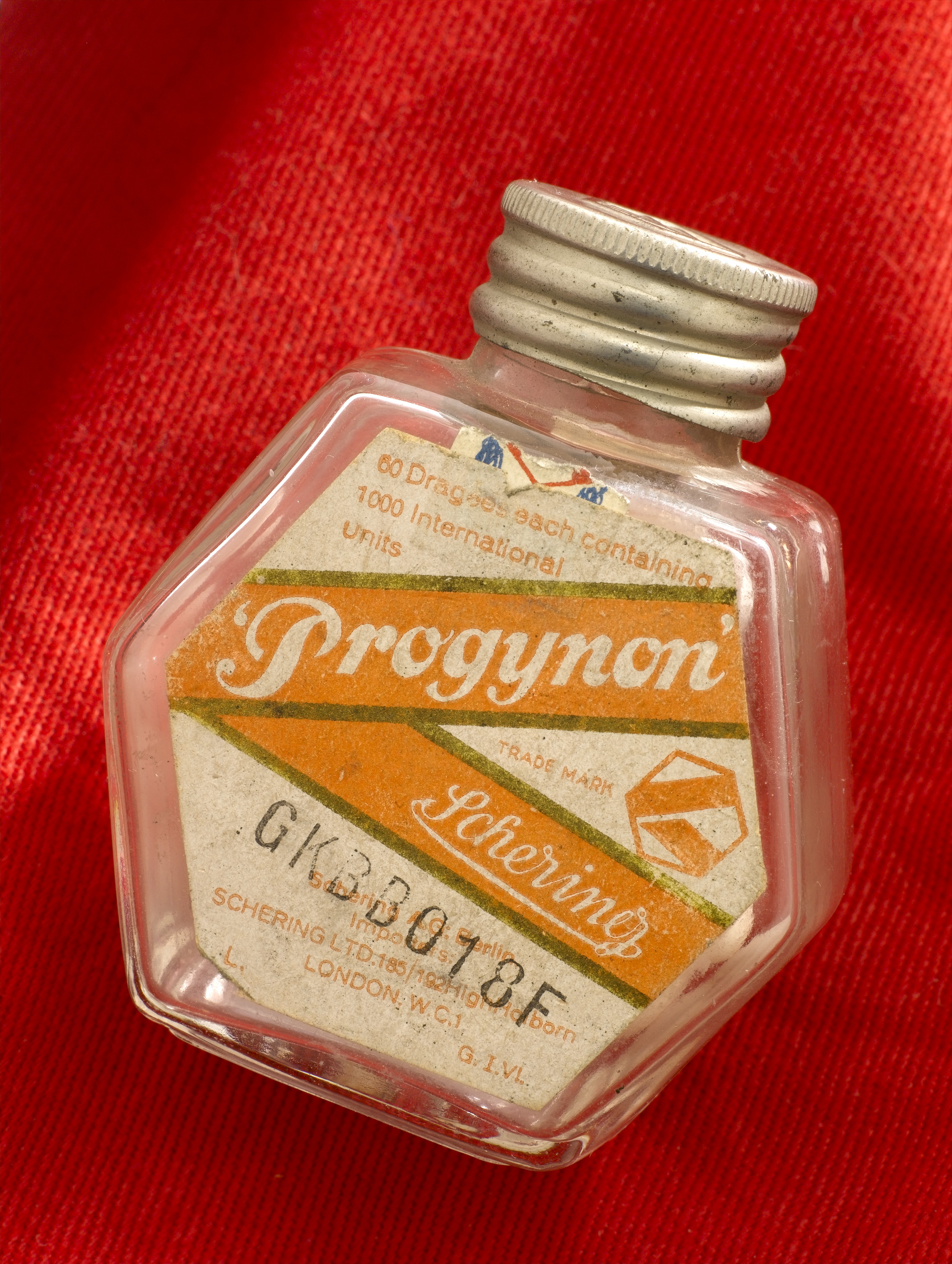
\(\newcommand{\avec}{\mathbf a}\) \(\newcommand{\bvec}{\mathbf b}\) \(\newcommand{\cvec}{\mathbf c}\) \(\newcommand{\dvec}{\mathbf d}\) \(\newcommand{\dtil}{\widetilde{\mathbf d}}\) \(\newcommand{\evec}{\mathbf e}\) \(\newcommand{\fvec}{\mathbf f}\) \(\newcommand{\nvec}{\mathbf n}\) \(\newcommand{\pvec}{\mathbf p}\) \(\newcommand{\qvec}{\mathbf q}\) \(\newcommand{\svec}{\mathbf s}\) \(\newcommand{\tvec}{\mathbf t}\) \(\newcommand{\uvec}{\mathbf u}\) \(\newcommand{\vvec}{\mathbf v}\) \(\newcommand{\wvec}{\mathbf w}\) \(\newcommand{\xvec}{\mathbf x}\) \(\newcommand{\yvec}{\mathbf y}\) \(\newcommand{\zvec}{\mathbf z}\) \(\newcommand{\rvec}{\mathbf r}\) \(\newcommand{\mvec}{\mathbf m}\) \(\newcommand{\zerovec}{\mathbf 0}\) \(\newcommand{\onevec}{\mathbf 1}\) \(\newcommand{\real}{\mathbb R}\) \(\newcommand{\twovec}[2]{\left[\begin{array}{r}#1 \\ #2 \end{array}\right]}\) \(\newcommand{\ctwovec}[2]{\left[\begin{array}{c}#1 \\ #2 \end{array}\right]}\) \(\newcommand{\threevec}[3]{\left[\begin{array}{r}#1 \\ #2 \\ #3 \end{array}\right]}\) \(\newcommand{\cthreevec}[3]{\left[\begin{array}{c}#1 \\ #2 \\ #3 \end{array}\right]}\) \(\newcommand{\fourvec}[4]{\left[\begin{array}{r}#1 \\ #2 \\ #3 \\ #4 \end{array}\right]}\) \(\newcommand{\cfourvec}[4]{\left[\begin{array}{c}#1 \\ #2 \\ #3 \\ #4 \end{array}\right]}\) \(\newcommand{\fivevec}[5]{\left[\begin{array}{r}#1 \\ #2 \\ #3 \\ #4 \\ #5 \\ \end{array}\right]}\) \(\newcommand{\cfivevec}[5]{\left[\begin{array}{c}#1 \\ #2 \\ #3 \\ #4 \\ #5 \\ \end{array}\right]}\) \(\newcommand{\mattwo}[4]{\left[\begin{array}{rr}#1 \amp #2 \\ #3 \amp #4 \\ \end{array}\right]}\) \(\newcommand{\laspan}[1]{\text{Span}\{#1\}}\) \(\newcommand{\bcal}{\cal B}\) \(\newcommand{\ccal}{\cal C}\) \(\newcommand{\scal}{\cal S}\) \(\newcommand{\wcal}{\cal W}\) \(\newcommand{\ecal}{\cal E}\) \(\newcommand{\coords}[2]{\left\{#1\right\}_{#2}}\) \(\newcommand{\gray}[1]{\color{gray}{#1}}\) \(\newcommand{\lgray}[1]{\color{lightgray}{#1}}\) \(\newcommand{\rank}{\operatorname{rank}}\) \(\newcommand{\row}{\text{Row}}\) \(\newcommand{\col}{\text{Col}}\) \(\renewcommand{\row}{\text{Row}}\) \(\newcommand{\nul}{\text{Nul}}\) \(\newcommand{\var}{\text{Var}}\) \(\newcommand{\corr}{\text{corr}}\) \(\newcommand{\len}[1]{\left|#1\right|}\) \(\newcommand{\bbar}{\overline{\bvec}}\) \(\newcommand{\bhat}{\widehat{\bvec}}\) \(\newcommand{\bperp}{\bvec^\perp}\) \(\newcommand{\xhat}{\widehat{\xvec}}\) \(\newcommand{\vhat}{\widehat{\vvec}}\) \(\newcommand{\uhat}{\widehat{\uvec}}\) \(\newcommand{\what}{\widehat{\wvec}}\) \(\newcommand{\Sighat}{\widehat{\Sigma}}\) \(\newcommand{\lt}{<}\) \(\newcommand{\gt}{>}\) \(\newcommand{\amp}{&}\) \(\definecolor{fillinmathshade}{gray}{0.9}\)In 1928, a medication called Progynon was developed that contained estrogen to control the effects of menopause in women.
Estrogen secretion declines in women around the time of menopause and may cause symptoms such as mood swings and hot flashes. The pills were supposed to ease the symptoms by supplementing estrogen in the body.
The first version of the pills obtained estrogen from the urine of pregnant women. The next generation of the medication sourced the estrogen from the urine of pregnant horses to lower costs. The estrogen in Progynon sold today is synthetic but just as strong as the original versions.
How Do Endocrine Hormones Work?
Endocrine hormones, such as estrogen, are messenger molecules secreted by endocrine glands into the bloodstream. They travel throughout the body in the circulation. Although they reach virtually every cell in the body in this way, each hormone affects only certain cells, called target cells. A target cell is the type of cell on which a hormone has an effect. A target cell is affected by a particular hormone because it has receptor proteins — either on the cell surface or within the cell — that are specific to that hormone. An endocrine hormone travels through the bloodstream until it finds a target cell with a matching receptor to which it can bind. When the hormone binds to the receptor, it causes changes within the cell. The manner in which it changes the cell depends on whether the hormone is a steroid hormone or a non-steroid hormone.
Steroid Hormones
Steroid hormones are made of lipids. Examples of steroid hormones include cortisol, secreted by the adrenal glands, and sex hormones such as testosterone and estrogen, secreted by the gonads. They are fat-soluble and can diffuse across a target cell’s plasma membrane.
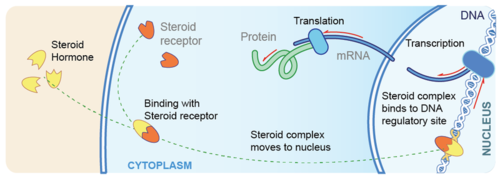
Once inside the cell, a steroid hormone binds with receptor proteins in the cytoplasm.
The steroid hormone and its receptor form a complex, called a steroid complex, which enters the nucleus and influences gene expression (Figure \(\PageIndex{2}\)).
Non-steroid Hormones
Most endocrine hormones are non-steroid hormones made of amino acids. Examples include glucagon and insulin, both produced by the pancreas.
They are not fat-soluble, so they cannot diffuse across the plasma membrane of a target cell. Instead, they bind to a receptor protein on a cell's membrane, activating an enzyme (Figure \(\PageIndex{3}\)).
The enzyme then stimulates another molecule, called the second messenger, which influences cellular processes.

Regulation of Endocrine Hormones
Hormones from the endocrine system control virtually all physiological processes. For example, they control growth, sexual maturation, reproduction, body temperature, blood pressure, and metabolism.
Endocrine hormones regulate many body processes, but what regulates the secretion of endocrine hormones? Most endocrine hormones are controlled by feedback mechanisms. A feedback mechanism is a loop in which a product feeds back to control its own production. Feedback loops may be either negative or positive.
- Most endocrine hormones are regulated by negative feedback loops. Negative feedback keeps the concentration of a hormone within a relatively narrow range and maintains homeostasis.
- Very few endocrine hormones are regulated by positive feedback loops. Positive feedback increases the concentration of a hormone.
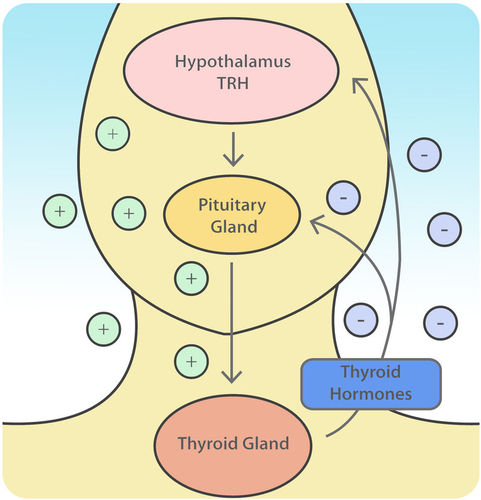
An example of a negative feedback loop is the control of thyroid hormone synthesis and secretion.
This loop includes the hypothalamus and pituitary gland in addition to the thyroid (Figure \(\PageIndex{4}\)).
- When the levels of thyroid hormones circulating in the blood fall too low, the hypothalamus secretes thyrotropin-releasing hormone (TRH). This hormone travels directly to the pituitary gland through the thin stalk connecting the two structures.
- In the pituitary gland, TRH stimulates the pituitary to secrete thyroid-stimulating hormone (TSH).
- TSH, in turn, travels through the bloodstream to the thyroid gland, where it stimulates the gland to secrete thyroid hormones.
- This continues until the thyroid hormone levels are high enough.
- At that point, the thyroid hormones feed back to stop the hypothalamus from secreting TRH and the pituitary from secreting TSH.
- Without TSH stimulation, the thyroid gland stops secreting its hormones.
- Eventually, the levels of thyroid hormones in the blood start to fall too low again. When that happens, the hypothalamus releases TRH, and the loop repeats.
An example of a positive feedback mechanism is the regulation of prolactin. Prolactin is a non-steroid endocrine hormone secreted by the pituitary gland. One of the functions of prolactin is to stimulate a nursing mother’s mammary glands to produce milk.
As this nursing infant suckles, the action sends nerve impulses to her hypothalamus (Figure \(\PageIndex{5}\)). The hypothalamus directs her pituitary gland to release prolactin, a hormone, into her bloodstream.
Prolactin regulation in the mother is controlled by a positive feedback loop involving the nipples, hypothalamus, pituitary gland, and mammary glands.
- Positive feedback begins when a baby suckles on the mother’s nipple.
- Nerve impulses from the nipple reach the hypothalamus, which stimulates the pituitary gland to secrete prolactin.
- Prolactin travels in the blood to the mammary glands and stimulates them to produce milk.
- The release of milk prompts the baby to continue suckling, which, in turn, stimulates further prolactin secretion and milk production.
- The positive feedback loop continues until the baby stops suckling at the breast.

Anabolic steroids are synthetic versions of the naturally occurring male sex hormone testosterone. Male hormones have androgenic, or masculinizing, effects, but they also have anabolic, or muscle-building effects. The anabolic effects are the reason that synthetic steroids are used by athletes. In addition to building muscle, they also accelerate bone and red blood cell development, increase endurance so athletes can train harder and longer, and speed up muscle recovery. Unfortunately, these benefits of steroid use come with costs. If you ever consider taking anabolic steroids to build muscles and improve athletic performance, consider the following myths and corresponding realities.
Myth: Anabolic steroids are safe.
Reality: Steroid use may cause several serious side effects. Prolonged use may increase the risk of liver cancer, heart disease, and high blood pressure. Steroids should only be taken under the supervision of a medical professional.
Myth: Steroids will not stunt your growth.
Reality: Teens who take steroids before they have finished growing in height may have their growth stunted so they remain shorter throughout life than they would otherwise have been. Such stunting occurs because steroids accelerate skeletal maturation. Once skeletal maturity is reached, further growth in height is no longer possible.
Myth: Steroids do not cause drug dependency.
Reality: Steroid use may cause dependency, as evidenced by the negative effects of stopping steroid use. These negative effects may include insomnia, fatigue, and depressed mood, among others.
Myth: There is no such thing as “roid rage.”
Reality: Steroid use has been shown to increase aggressiveness in some people. It has also been implicated in a number of violent acts committed by people who had not demonstrated violent tendencies until they started using steroids.
Myth: Only males use steroids.
Reality: Although steroid use is more common in males than in females, some females also use steroids. They use them to build muscle and improve physical performance, often for athletic competition or self-defense.