

18.3: Digestion and Absorption
- Page ID
- 22580

\( \newcommand{\vecs}[1]{\overset { \scriptstyle \rightharpoonup} {\mathbf{#1}} } \)
\( \newcommand{\vecd}[1]{\overset{-\!-\!\rightharpoonup}{\vphantom{a}\smash {#1}}} \)
\( \newcommand{\dsum}{\displaystyle\sum\limits} \)
\( \newcommand{\dint}{\displaystyle\int\limits} \)
\( \newcommand{\dlim}{\displaystyle\lim\limits} \)
\( \newcommand{\id}{\mathrm{id}}\) \( \newcommand{\Span}{\mathrm{span}}\)
( \newcommand{\kernel}{\mathrm{null}\,}\) \( \newcommand{\range}{\mathrm{range}\,}\)
\( \newcommand{\RealPart}{\mathrm{Re}}\) \( \newcommand{\ImaginaryPart}{\mathrm{Im}}\)
\( \newcommand{\Argument}{\mathrm{Arg}}\) \( \newcommand{\norm}[1]{\| #1 \|}\)
\( \newcommand{\inner}[2]{\langle #1, #2 \rangle}\)
\( \newcommand{\Span}{\mathrm{span}}\)
\( \newcommand{\id}{\mathrm{id}}\)
\( \newcommand{\Span}{\mathrm{span}}\)
\( \newcommand{\kernel}{\mathrm{null}\,}\)
\( \newcommand{\range}{\mathrm{range}\,}\)
\( \newcommand{\RealPart}{\mathrm{Re}}\)
\( \newcommand{\ImaginaryPart}{\mathrm{Im}}\)
\( \newcommand{\Argument}{\mathrm{Arg}}\)
\( \newcommand{\norm}[1]{\| #1 \|}\)
\( \newcommand{\inner}[2]{\langle #1, #2 \rangle}\)
\( \newcommand{\Span}{\mathrm{span}}\) \( \newcommand{\AA}{\unicode[.8,0]{x212B}}\)
\( \newcommand{\vectorA}[1]{\vec{#1}} % arrow\)
\( \newcommand{\vectorAt}[1]{\vec{\text{#1}}} % arrow\)
\( \newcommand{\vectorB}[1]{\overset { \scriptstyle \rightharpoonup} {\mathbf{#1}} } \)
\( \newcommand{\vectorC}[1]{\textbf{#1}} \)
\( \newcommand{\vectorD}[1]{\overrightarrow{#1}} \)
\( \newcommand{\vectorDt}[1]{\overrightarrow{\text{#1}}} \)
\( \newcommand{\vectE}[1]{\overset{-\!-\!\rightharpoonup}{\vphantom{a}\smash{\mathbf {#1}}}} \)
\( \newcommand{\vecs}[1]{\overset { \scriptstyle \rightharpoonup} {\mathbf{#1}} } \)
\(\newcommand{\longvect}{\overrightarrow}\)
\( \newcommand{\vecd}[1]{\overset{-\!-\!\rightharpoonup}{\vphantom{a}\smash {#1}}} \)
\(\newcommand{\ket}[1]{\left| #1 \right>}\)
\(\newcommand{\bra}[1]{\left< #1 \right|}\)
\(\newcommand{\braket}[2]{\left< #1 \vphantom{#2} \right| \left. #2 \vphantom{#1} \right>}\)
\(\newcommand{\braopket}[3]{\left< #1 \vphantom{#2}\vphantom{#3} \right| #2 \vphantom{#1}\vphantom{#3} \left| #3 \vphantom{#1}\vphantom{#2} \right>}\)
\(\newcommand{\qmvec}[1]{\mathbf{\vec{#1}}}\)
\(\newcommand{\op}[1]{\hat{\mathbf{#1}}}\)
\(\newcommand{\expect}[1]{\langle #1 \rangle}\)
\(\newcommand{\dfn}[1]{\emph{\textbf{#1}}}\)
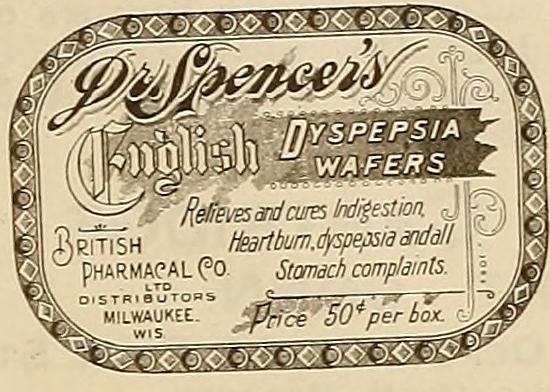
The process of digestion does not always go as it should. Many people suffer from indigestion, or dyspepsia, a condition of impaired digestion. Symptoms may include upper abdominal fullness or pain, heartburn, nausea, belching, or some combination of these symptoms. The majority of cases of indigestion occur without evidence of an organic disease that is likely to explain the symptoms. Anxiety or certain foods or medications (such as aspirin) may be contributing factors in these cases. In other cases, indigestion is a symptom of an organic disease, most often gastroesophageal reflux disease (GERD) or gastritis. In a small minority of cases, indigestion is a symptom of a peptic ulcer of the stomach or duodenum, usually caused by a bacterial infection. Very rarely, indigestion is a sign of cancer.
An occasional bout of indigestion is usually nothing to worry about, especially in people less than 55 years of age. However, if you suffer frequent or chronic indigestion, it’s a good idea to see a doctor. If an underlying disorder such as GERD or an ulcer is causing indigestion, this can and should be treated. If no organic disease is discovered, the doctor can recommend lifestyle changes or treatments to help prevent or soothe the symptoms of acute indigestion. Lifestyle changes might include modifications in eating habits, such as eating more slowly, eating smaller meals, or avoiding fatty foods. You also might be advised to refrain from taking certain medications, especially on an empty stomach. The use of antacids or other medications to relieve symptoms may also be recommended
Digestion
Digestion of food is a form of catabolism, in which the food is broken down into small molecules that the body can absorb and use for energy, growth, and repair. Digestion occurs when food is moved through the digestive system. It begins in the mouth and ends in the small intestine. The final products of digestion are absorbed from the digestive tract, primarily in the small intestine. There are two different types of digestion that occur in the digestive system: mechanical digestion and chemical digestion. Figure \(\PageIndex{2}\) summarizes the roles played by different digestive organs in mechanical and chemical digestion, both of which are described in detail in the text.

Mechanical Digestion
Mechanical digestion is a physical process in which food is broken into smaller pieces without becoming changed chemically. It begins with your first bite of food and continues as you chew food with your teeth into smaller pieces. The process of mechanical digestion continues in the stomach. This muscular organ churns and mixes the food it contains, an action that breaks any solid food into still smaller pieces.
Although some mechanical digestion also occurs in the intestines, it is mostly completed by the time food leaves the stomach. At that stage, food in the GI tract has been changed to the thick semi-fluid called chyme. Mechanical digestion is necessary so that chemical digestion can be effective. Mechanical digestion tremendously increases the surface area of food particles so they can be acted upon more effectively by digestive enzymes.
Chemical Digestion
Chemical digestion is the biochemical process in which macromolecules in food are changed into smaller molecules that can be absorbed into body fluids and transported to cells throughout the body. Substances in food that must be chemically digested include carbohydrates, proteins, lipids, and nucleic acids. Carbohydrates must be broken down into simple sugars, proteins into amino acids, lipids into fatty acids and glycerol, and nucleic acids into nitrogen bases and sugars. Some chemical digestion takes place in the mouth and stomach, but most of it occurs in the first part of the small intestine (duodenum).
Digestive Enzymes
Chemical digestion could not occur without the help of many different digestive enzymes. Enzymes are proteins that catalyze or speed up biochemical reactions. Digestive enzymes are secreted by exocrine glands or by the mucosal layer of the epithelium lining the gastrointestinal tract. In the mouth, digestive enzymes are secreted by salivary glands. The lining of the stomach secretes enzymes, as does the lining of the small intestine. Many more digestive enzymes are secreted by exocrine cells in the pancreas and carried by ducts to the small intestine. Table \(\PageIndex{1}\) lists several important digestive enzymes, the organs and/or glands that secrete them, and the compounds they digest. You can read more about them in the text.
| Digestive Enzyme | Organ, Glands That Secretes It | Compound It Digests |
|---|---|---|
| Amylase | Salivary Glands, Pancreas | Amylose (Polysaccharide) |
| Sucrase | Small Intestine | Sucrose (Disaccharide) |
| Lactase | Small Intestine | Lactose (Disaccharide) |
| Lipase | Salivary Glands, Pancreas | Lipid |
| Pepsin | Stomach | Protein |
| Trypsin | Pancreas | Protein |
| Chymotrypsin | Pancreas | Protein |
| Deoxyribonuclease | Pancreas | DNA |
| Ribonuclease | Pancreas | RNA |
| Nuclease | Small Intestine | Small Nucleic Acids |
Chemical Digestion of Carbohydrates
About 80 percent of digestible carbohydrates in a typical Western diet are in the form of the plant polysaccharide amylose, which consists mainly of long chains of glucose and is one of two major components of starch. Additional dietary carbohydrates include the animal polysaccharide glycogen, along with some sugars, which are mainly disaccharides.
To chemically digest amylose and glycogen, the enzyme amylase is required. The chemical digestion of these polysaccharides begins in the mouth, aided by amylase in saliva. Saliva also contains mucus, which lubricates the food, and hydrogen carbonate, which provides the ideal alkaline conditions for amylase to work. Carbohydrate digestion is completed in the small intestine, with the help of amylase secreted by the pancreas. In the digestive process, polysaccharides are reduced in length by the breaking of bonds between glucose monomers. The macromolecules are broken down to shorter polysaccharides and disaccharides, resulting in progressively shorter chains of glucose. The end result is molecules of the simple sugars glucose and maltose (which consists of two glucose molecules), both of which can be absorbed by the small intestine.
Other sugars are digested with the help of different enzymes produced by the small intestine. For example, sucrose, or table sugar, is a disaccharide that is broken down by the enzyme sucrase to form glucose and fructose, which are readily absorbed by the small intestine. Digestion of the sugar lactose, which is found in milk, requires the enzyme lactase, which breaks down lactose into glucose and galactose, which are then absorbed by the small intestine. Fewer than half of all adults produce sufficient lactase to be able to digest lactose. Those who cannot are said to be lactose intolerant.
Chemical Digestion of Proteins
Proteins consist of polypeptides, which must be broken down into their constituent amino acids before they can be absorbed. Protein digestion occurs in the stomach and small intestine through the action of three primary enzymes: pepsin, secreted by the stomach; and trypsin and chymotrypsin secreted by the pancreas. The stomach also secretes hydrochloric acid, making the contents highly acidic, which is required for pepsin to work. Trypsin and chymotrypsin in the small intestine require an alkaline environment to work. Bile from the liver and bicarbonate from the pancreas neutralize the acidic chyme as it empties into the small intestine. After pepsin, trypsin, and chymotrypsin break down proteins into peptides, these are further broken down into amino acids by other enzymes called peptidases, also secreted by the pancreas.
Chemical Digestion of Lipids
The chemical digestion of lipids begins in the mouth. The salivary glands secrete the digestive enzyme lipase, which breaks down short-chain lipids into molecules consisting of two fatty acids. A tiny amount of lipid digestion may take place in the stomach, but most lipid digestion occurs in the small intestine.
Digestion of lipids in the small intestine occurs with the help of another lipase enzyme from the pancreas as well as bile secreted by the liver. Bile is required for the digestion of lipids because lipids are oily and do not dissolve in the watery chyme. Bile emulsifies, or breaks up, large globules of food lipids into much smaller ones, called micelles, much as dish detergent breaks up grease. The micelles provide a great deal more surface area to be acted upon by lipase and also point the hydrophilic (“water-loving”) heads of the fatty acids outward into the watery chyme. Lipase can then access and break down the micelles into individual fatty acid molecules.
Chemical Digestion of Nucleic Acids
Nucleic acids (DNA and RNA) in foods are digested in the small intestine with the help of both pancreatic enzymes and enzymes produced by the small intestine itself. Pancreatic enzymes called ribonuclease and deoxyribonuclease break down RNA and DNA, respectively, into smaller nucleic acids. These, in turn, are further broken down into nitrogen bases and sugars by small intestine enzymes called nucleases.
Chemical Digestion by Gut Flora
The human gastrointestinal tract is normally inhabited by trillions of bacteria, some of which contribute to digestion. Here are just two of dozens of examples:
- The most common carbohydrate in plants, which is cellulose, cannot be digested by the human digestive system. However, tiny amounts of cellulose are digested by bacteria in the large intestine.
- Certain bacteria in the small intestine help digest lactose, which many adults cannot otherwise digest. As a byproduct of this process, the bacteria produce lactic acid, which increases the release of digestive enzymes and the absorption of minerals such as calcium and iron.
Absorption
When digestion is finished, it results in many simple nutrient molecules that must go through the process of absorption from the GI tract by blood or lymph so they can be used by cells throughout the body. A few substances are absorbed in the stomach and large intestine. For example, water is absorbed in both of these organs, and some minerals and vitamins are also absorbed in the large intestine. However, about 95 percent of nutrient molecules are absorbed in the small intestine. The absorption of the majority of these molecules takes place in the second part of the small intestine, called the jejunum. However, there are a few exceptions. For example, iron is absorbed in the duodenum, and vitamin B12 is absorbed in the last part of the small intestine, called the ileum. After being absorbed in the small intestine, nutrient molecules are transported to other parts of the body for storage or further chemical modification. For example, amino acids are transported to the liver to be used for protein synthesis.
The epithelial tissue lining the small intestine is specialized for absorption. It has many wrinkles and is covered with villi and microvilli, creating an enormous surface area for absorption. As shown in Figure \(\PageIndex{3}\), each villus also has a network of blood capillaries and fine lymphatic vessels called lacteals close to its surface. The thin surface layer of epithelial cells of the villi transports nutrients from the lumen of the small intestine into these capillaries and lacteals. Blood in the capillaries absorbs most of the molecules, including simple sugars, amino acids, glycerol, salts, and water-soluble vitamins (vitamin C and the many B vitamins). Lymph in the lacteals absorbs fatty acids and fat-soluble vitamins (vitamins A, D, E, and K).

The process of digestion does not always go as it should. Many people suffer from indigestion, or dyspepsia, a condition of impaired digestion. Symptoms may include upper abdominal fullness or pain, heartburn, nausea, belching, or some combination of these symptoms. The majority of cases of indigestion occur without evidence of an organic disease that is likely to explain the symptoms. Anxiety or certain foods or medications (such as aspirin) may be contributing factors in these cases. In other cases, indigestion is a symptom of an organic disease, most often gastroesophageal reflux disease (GERD) or gastritis. In a small minority of cases, indigestion is a symptom of a peptic ulcer of the stomach or duodenum, usually caused by a bacterial infection. Very rarely, indigestion is a sign of cancer.
An occasional bout of indigestion is usually nothing to worry about, especially in people less than 55 years of age. However, if you suffer frequent or chronic indigestion, it’s a good idea to see a doctor. If an underlying disorder such as GERD or an ulcer is causing indigestion, this can and should be treated. If no organic disease is discovered, the doctor can recommend lifestyle changes or treatments to help prevent or soothe the symptoms of acute indigestion. Lifestyle changes might include modifications in eating habits, such as eating more slowly, eating smaller meals, or avoiding fatty foods. You also might be advised to refrain from taking certain medications, especially on an empty stomach. The use of antacids or other medications to relieve symptoms may also be recommended.
Review
- Define digestion. Where does it occur?
- Identify two organ systems that control the process of digestion by the digestive system.
- What is mechanical digestion? Where does it occur?
- Describe chemical digestion.
- What is the role of enzymes in chemical digestion?
- What is absorption? When does it occur?
- a. Where does most absorption occur in the digestive system?
b. Why does most of the absorption occur in this organ and not earlier in the GI tract?
- Name two digestive enzymes found in saliva and identify which type of molecule they digest.
- a. Where is bile produced?
b. What are some functions of bile?
- True or False. Pepsin digests cellulose.
- True or False. Glucose can be absorbed by the body without being further broken down.
- The pH of the stomach ___________ .
A. is neutral B. is alkaline
C. is acidic D. depends only on what you eat
- Lymph absorbs __________ .
A. fatty acids B. sugars
C. amino acids D. vitamin C
Explore More
New research shows that babies born through vaginal birth actually have healthier gut flora, learn more here:
Attributions
- Dyspepsia wafers, Public Domain via Flickr.com
- Mechanical and Chemical Digestion by Open Stax College, CC BY 3.0 via Wikimedia Commons
- Intestinal villus simplified by Snow93, Public Domain via Wikimedia Commons
- Text adapted from Human Biology by CK-12 licensed CC BY-NC 3.0