
Biology LibreTexts

22.2: Biosynthesis of Amino Acids

  • Page ID
    15179
  • \( \newcommand{\vecs}[1]{\overset { \scriptstyle \rightharpoonup} {\mathbf{#1}} } \)

    \( \newcommand{\vecd}[1]{\overset{-\!-\!\rightharpoonup}{\vphantom{a}\smash {#1}}} \)

    \( \newcommand{\dsum}{\displaystyle\sum\limits} \)

    \( \newcommand{\dint}{\displaystyle\int\limits} \)

    \( \newcommand{\dlim}{\displaystyle\lim\limits} \)

    \( \newcommand{\id}{\mathrm{id}}\) \( \newcommand{\Span}{\mathrm{span}}\)

    ( \newcommand{\kernel}{\mathrm{null}\,}\) \( \newcommand{\range}{\mathrm{range}\,}\)

    \( \newcommand{\RealPart}{\mathrm{Re}}\) \( \newcommand{\ImaginaryPart}{\mathrm{Im}}\)

    \( \newcommand{\Argument}{\mathrm{Arg}}\) \( \newcommand{\norm}[1]{\| #1 \|}\)

    \( \newcommand{\inner}[2]{\langle #1, #2 \rangle}\)

    \( \newcommand{\Span}{\mathrm{span}}\)

    \( \newcommand{\id}{\mathrm{id}}\)

    \( \newcommand{\Span}{\mathrm{span}}\)

    \( \newcommand{\kernel}{\mathrm{null}\,}\)

    \( \newcommand{\range}{\mathrm{range}\,}\)

    \( \newcommand{\RealPart}{\mathrm{Re}}\)

    \( \newcommand{\ImaginaryPart}{\mathrm{Im}}\)

    \( \newcommand{\Argument}{\mathrm{Arg}}\)

    \( \newcommand{\norm}[1]{\| #1 \|}\)

    \( \newcommand{\inner}[2]{\langle #1, #2 \rangle}\)

    \( \newcommand{\Span}{\mathrm{span}}\) \( \newcommand{\AA}{\unicode[.8,0]{x212B}}\)

    \( \newcommand{\vectorA}[1]{\vec{#1}}      % arrow\)

    \( \newcommand{\vectorAt}[1]{\vec{\text{#1}}}      % arrow\)

    \( \newcommand{\vectorB}[1]{\overset { \scriptstyle \rightharpoonup} {\mathbf{#1}} } \)

    \( \newcommand{\vectorC}[1]{\textbf{#1}} \)

    \( \newcommand{\vectorD}[1]{\overrightarrow{#1}} \)

    \( \newcommand{\vectorDt}[1]{\overrightarrow{\text{#1}}} \)

    \( \newcommand{\vectE}[1]{\overset{-\!-\!\rightharpoonup}{\vphantom{a}\smash{\mathbf {#1}}}} \)

    \( \newcommand{\vecs}[1]{\overset { \scriptstyle \rightharpoonup} {\mathbf{#1}} } \)

    \(\newcommand{\longvect}{\overrightarrow}\)

    \( \newcommand{\vecd}[1]{\overset{-\!-\!\rightharpoonup}{\vphantom{a}\smash {#1}}} \)

    \(\newcommand{\avec}{\mathbf a}\) \(\newcommand{\bvec}{\mathbf b}\) \(\newcommand{\cvec}{\mathbf c}\) \(\newcommand{\dvec}{\mathbf d}\) \(\newcommand{\dtil}{\widetilde{\mathbf d}}\) \(\newcommand{\evec}{\mathbf e}\) \(\newcommand{\fvec}{\mathbf f}\) \(\newcommand{\nvec}{\mathbf n}\) \(\newcommand{\pvec}{\mathbf p}\) \(\newcommand{\qvec}{\mathbf q}\) \(\newcommand{\svec}{\mathbf s}\) \(\newcommand{\tvec}{\mathbf t}\) \(\newcommand{\uvec}{\mathbf u}\) \(\newcommand{\vvec}{\mathbf v}\) \(\newcommand{\wvec}{\mathbf w}\) \(\newcommand{\xvec}{\mathbf x}\) \(\newcommand{\yvec}{\mathbf y}\) \(\newcommand{\zvec}{\mathbf z}\) \(\newcommand{\rvec}{\mathbf r}\) \(\newcommand{\mvec}{\mathbf m}\) \(\newcommand{\zerovec}{\mathbf 0}\) \(\newcommand{\onevec}{\mathbf 1}\) \(\newcommand{\real}{\mathbb R}\) \(\newcommand{\twovec}[2]{\left[\begin{array}{r}#1 \\ #2 \end{array}\right]}\) \(\newcommand{\ctwovec}[2]{\left[\begin{array}{c}#1 \\ #2 \end{array}\right]}\) \(\newcommand{\threevec}[3]{\left[\begin{array}{r}#1 \\ #2 \\ #3 \end{array}\right]}\) \(\newcommand{\cthreevec}[3]{\left[\begin{array}{c}#1 \\ #2 \\ #3 \end{array}\right]}\) \(\newcommand{\fourvec}[4]{\left[\begin{array}{r}#1 \\ #2 \\ #3 \\ #4 \end{array}\right]}\) \(\newcommand{\cfourvec}[4]{\left[\begin{array}{c}#1 \\ #2 \\ #3 \\ #4 \end{array}\right]}\) \(\newcommand{\fivevec}[5]{\left[\begin{array}{r}#1 \\ #2 \\ #3 \\ #4 \\ #5 \\ \end{array}\right]}\) \(\newcommand{\cfivevec}[5]{\left[\begin{array}{c}#1 \\ #2 \\ #3 \\ #4 \\ #5 \\ \end{array}\right]}\) \(\newcommand{\mattwo}[4]{\left[\begin{array}{rr}#1 \amp #2 \\ #3 \amp #4 \\ \end{array}\right]}\) \(\newcommand{\laspan}[1]{\text{Span}\{#1\}}\) \(\newcommand{\bcal}{\cal B}\) \(\newcommand{\ccal}{\cal C}\) \(\newcommand{\scal}{\cal S}\) \(\newcommand{\wcal}{\cal W}\) \(\newcommand{\ecal}{\cal E}\) \(\newcommand{\coords}[2]{\left\{#1\right\}_{#2}}\) \(\newcommand{\gray}[1]{\color{gray}{#1}}\) \(\newcommand{\lgray}[1]{\color{lightgray}{#1}}\) \(\newcommand{\rank}{\operatorname{rank}}\) \(\newcommand{\row}{\text{Row}}\) \(\newcommand{\col}{\text{Col}}\) \(\renewcommand{\row}{\text{Row}}\) \(\newcommand{\nul}{\text{Nul}}\) \(\newcommand{\var}{\text{Var}}\) \(\newcommand{\corr}{\text{corr}}\) \(\newcommand{\len}[1]{\left|#1\right|}\) \(\newcommand{\bbar}{\overline{\bvec}}\) \(\newcommand{\bhat}{\widehat{\bvec}}\) \(\newcommand{\bperp}{\bvec^\perp}\) \(\newcommand{\xhat}{\widehat{\xvec}}\) \(\newcommand{\vhat}{\widehat{\vvec}}\) \(\newcommand{\uhat}{\widehat{\uvec}}\) \(\newcommand{\what}{\widehat{\wvec}}\) \(\newcommand{\Sighat}{\widehat{\Sigma}}\) \(\newcommand{\lt}{<}\) \(\newcommand{\gt}{>}\) \(\newcommand{\amp}{&}\) \(\definecolor{fillinmathshade}{gray}{0.9}\)

    Search Fundamentals of Biochemistry

    Learning Goals (ChatGPT o3-mini)
    1. Classify Amino Acids by Nutritional Requirement:

      • Define and differentiate essential versus nonessential amino acids.
      • Explain the metabolic interdependence of certain amino acids (e.g., how deficiencies in cysteine or tyrosine can affect methionine or phenylalanine levels).
    2. Map Biosynthetic Origins to Central Metabolic Intermediates:

      • Identify glycolytic and TCA cycle intermediates (e.g., glucose‑6‑phosphate, 3‑phosphoglycerate, pyruvate, α‑ketoglutarate, and oxaloacetate) as precursors for amino acid synthesis.
      • Explain how these central metabolites channel into specific amino acid pathways.
    3. Describe Specific Pathways from Glycolytic Intermediates:

      • Outline the pathway of histidine synthesis from a phosphorylated ribose derivative originating from glucose‑6‑phosphate.
      • Detail the synthesis of serine from 3‑phosphoglycerate and its subsequent conversion into glycine and cysteine.
    4. Explain Aromatic Amino Acid Biosynthesis:

      • Summarize the initial steps (from phosphoenolpyruvate and erythrose 4‑phosphate) leading to chorismate.
      • Distinguish the branch pathways from chorismate that lead to the synthesis of tryptophan versus phenylalanine and tyrosine.
    5. Outline Branched-Chain Amino Acid (BCAA) Synthesis:

      • Describe how pyruvate serves as the precursor for alanine and for the branched-chain amino acids (valine, leucine, isoleucine).
      • Discuss the role of transamination in converting pyruvate to alanine and the additional steps required for BCAA formation.
    6. Integrate TCA-Derived Amino Acid Biosynthesis:

      • Explain the conversion of α‑ketoglutarate into glutamate and glutamine via transamination and subsequent glutamine synthetase activity.
      • Describe how glutamate serves as a precursor for proline and arginine, and relate these pathways to the urea cycle.
    7. Examine Aspartate-Derived Pathways:

      • Outline how oxaloacetate is transaminated to aspartate.
      • Describe downstream pathways that convert aspartate into asparagine, threonine, methionine, and lysine (highlighting the diaminopimelic acid pathway for lysine).
    8. Relate Amino Acid Metabolism to Energy and Nutrient Balance:

      • Explain how the breakdown (catabolism) of amino acids contributes to energy production during fasting and supports gluconeogenesis and ketogenesis.
      • Discuss why excess dietary amino acids cannot be stored and must be oxidatively degraded or excreted.
    9. Contextualize Amino Acid Biosynthesis within Cellular and Ecosystem Metabolism:

      • Summarize the Reactome “Cellular Metabolism of Amino Acids and Related Molecules” diagram to relate biosynthetic pathways to overall cellular metabolism.
      • Reflect on how the biosynthesis of amino acids supports primary productivity in plants and, by extension, the entire food web.

    These learning goals are designed to encourage you to:

    • Connect the individual pathways of amino acid synthesis with central metabolic processes.
    • Appreciate the complexity and integration of nutrient utilization in different nutritional states.
    • Understand how biosynthetic pathways are not only vital for protein synthesis but also for energy metabolism and overall cellular homeostasis.

    By mastering these goals, you will be well-equipped to understand the biochemical logic behind amino acid synthesis and its broader implications for metabolism and physiology.

    Introduction

    By the time many students reach the study of amino acid biosynthesis, they have encountered numerous pathways that learning new pathways for the amino acids may seem daunting, even though they can be clustered into subpathways. Most students are aware that, from a nutritional perspective, amino acids can be categorized into two types: nonessential and essential (those that require external dietary supplementation). These are shown for humans below.

    • Nonessential amino acids: Alanine, Asparagine, Aspartate, Cysteine, Glutamate, Glutamine, Glycine, Proline, Serine, Tyrosine
    • Essential amino acids: Arginine*, Histidine, Isoleucine, Leucine, Lysine, Methionine*, Phenylalanine*, Threonine, Tryptophan, Valine

    Three of the essential amino acids can be made in humans but need significant supplementation. Arginine is depleted in processing through the urea cycle. When cysteine levels are low, methionine is used to replace them, causing their levels to fall. If tyrosine is low, phenylalanine is used to replace it.

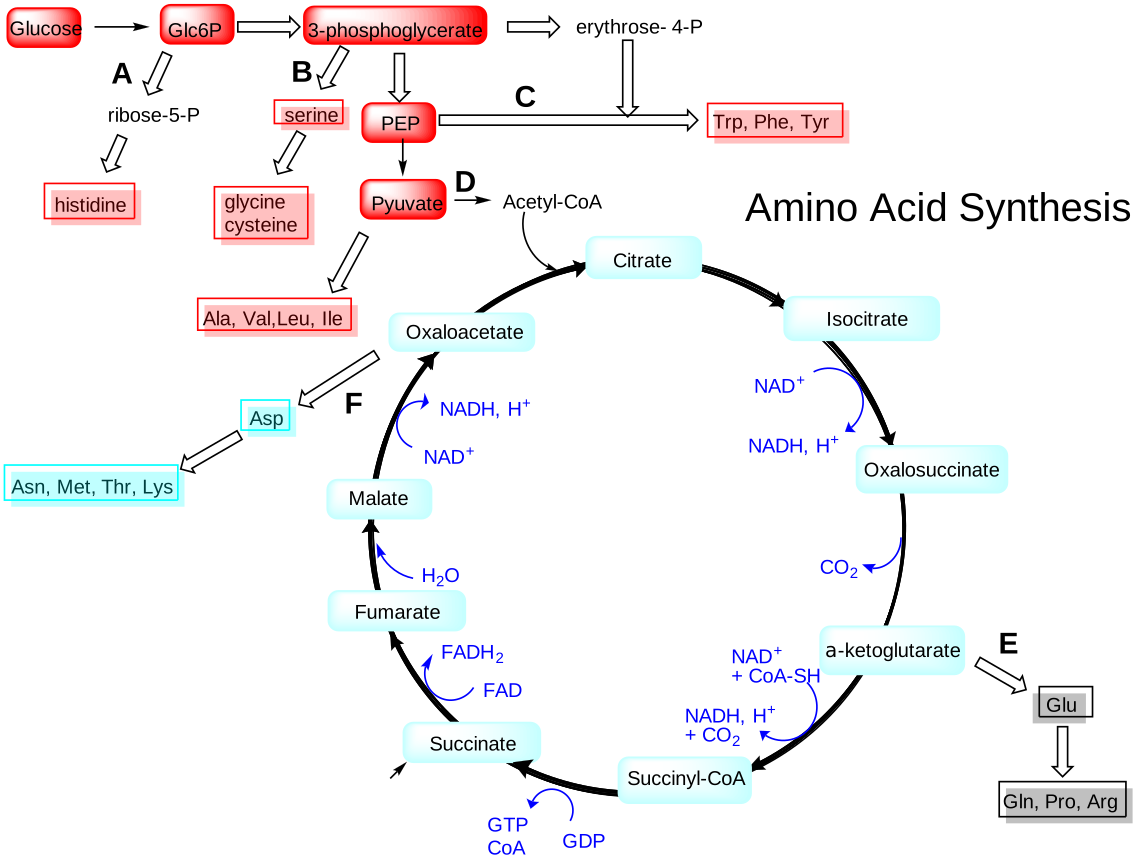
    The amino acids can be synthesized from glycolytic and citric acid cycle intermediates as shown in Figure \(\PageIndex{1}\)
    Flowchart with various colored boxes and arrows, outlining a process or system. Red and blue boxes contain text, with connections indicated by arrows.

    Figure \(\PageIndex{1}\): Summary amino acid synthesis from glycolytic and TCA intermediates

    For this chapter subsection, we will provide only the basic synthetic pathways in abbreviated form, without delving into mechanistic or structural details (likely to the relief of readers and authors alike).

    Amino acid synthesis from glycolytic intermediates

    From Glucose-6-Phosphate: Histidine

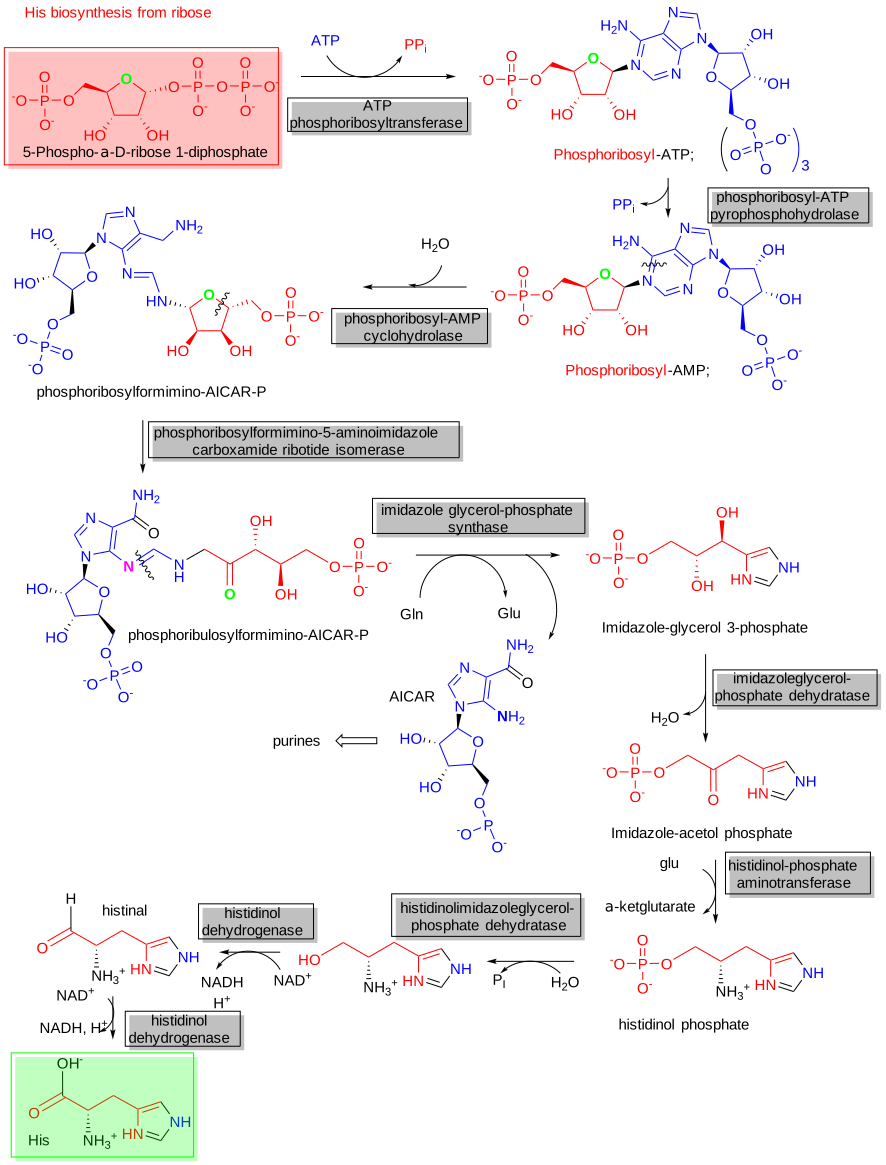
    The synthesis of histidine from a phosphorylated form of ribose (derived from glucose-6-phosphate) is shown in Figure \(\PageIndex{2}\).
    Chemical structures illustrated in red and blue, showcasing various molecular configurations and functional groups.

    Figure \(\PageIndex{2}\): Synthesis of histidine from a phosphorylated form of ribose

    From 3-phosphoglycerate: Serine, Glycine, and Cysteine

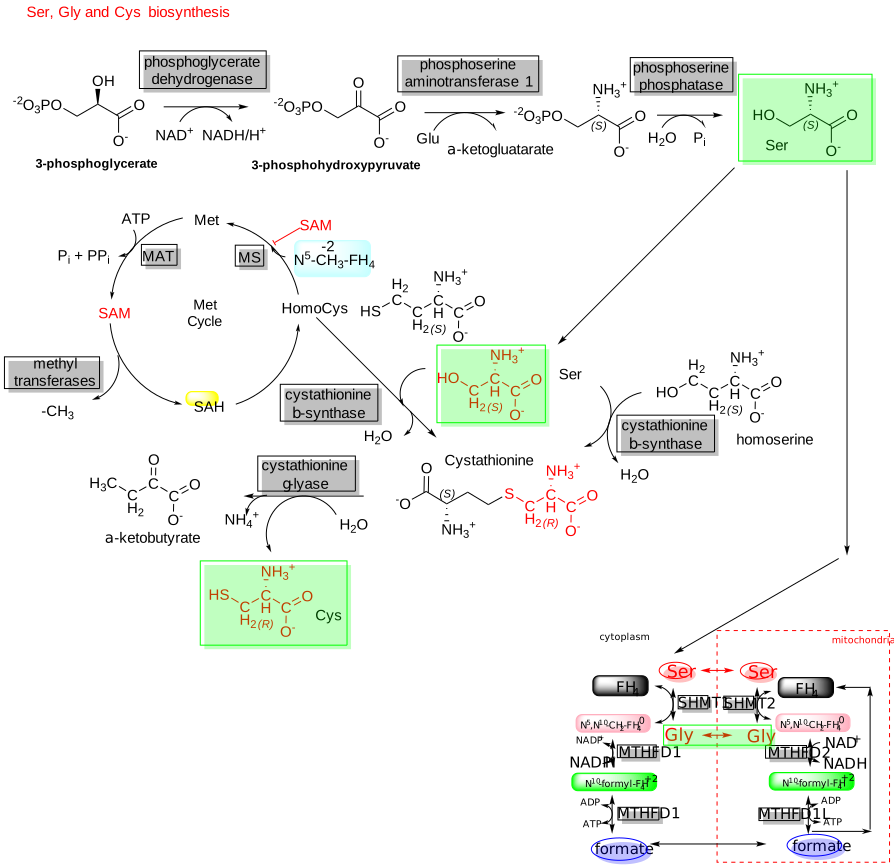
    The synthesis of serine, glycine, and cysteine from 3-phosphoglycerate is shown in Figure \(\PageIndex{3}\).
    Chemical structure diagram featuring various molecular representations with annotations in red, green, and blue boxes.

    Figure \(\PageIndex{3}\): The synthesis of serine, glycine, and cysteine from 3-phosphoglycerate

    Cysteine and control of body weight

    Recent studies have shown that inhibiting cysteine synthesis leads to significant body loss. The figure below shows simplified pathways for Cys synthesis (blue) and consumption (reversible, green; and irreversible, brown). 

    Diagram illustrating a central control unit with directional arrows indicating inputs and outputs, including a rejected input.

    Figure: Simplified pathways for Cys synthesis (blue) and consumption (reversible, green; and irreversible, brown). Cystathionine β-synthase (CBS) and cystathionine γ-lyase (CSE) are involved in the trans-sulfuration pathway for cysteine synthesis. Varghese, A., Gusarov, I., Gamallo-Lana, B. et al. Unravelling cysteine-deficiency-associated rapid weight loss. Nature (2025). https://doi.org/10.1038/s41586-025-08996-y.  Creative Commons Attribution-NonCommercial-NoDerivatives 4.0 International License.  http://creativecommons.org/licenses/by-nc-nd/4.0/.

    Dramatically decreasing cysteine leads to the depletion of glutathionine (γ-glutamylcysteinylglycine, GSH), the main reducing agent (and antioxidant) in the cell, and CoASH, which is needed for the citric acid cycle and oxidation of fatty acids. Deletions of the mouse gene for CSE (red cross) and the addition of the inhibitor BSO (purple) decrease GSH synthesis, which proceeds through VNN (vanin/pantetheinase), GT (glutamyl transferase, and GCS (glutamate–cysteine ligase). Cysteine is a nonessential amino acid, but can be made essential through the inhibitions described in the above figure. These inhibitions led to a 30% reduction in mouse body weight in just one week.  White adipose tissue was lost and replaced with brown adipose tissue.  Accompanying these changes were large changes in transcription and mitochondrial dysfunction. Ultimately, this results in malfunctions in both the cell's integrated stress response (ISR) and oxidative stress response (OSR), inhibiting mitochondrial function.  Glycolytic and citric acid intermediates are lost in the urine, leading to weight loss.

    What is so special about cysteine?  It is cytotoxic in high concentrations as it alters the redox balance.  Hence, has one of the lowest concentrations of free amino acids in the cell (typically 50–200 μM).  As you know from the study of protein structure, cysteine, as a free thiol, is a redox reagent (like β-mercaptoethanol or βME). βME is used at a concentration of 5% or about 7 M in SDS-PAGE reducing sample preparation solutions.  At these very high levels, it reduces disulfide bonds in proteins by forming mixed disulfides, and then, by further reaction with more βME, it forms free thiols in proteins.  Hence, it acts as a reducing agent.  At lower levels, it can form a persistent mixed disulfide with a cysteine or cystine in a target protein.  It is an oxidizing agent under these conditions (typical of a cellular environment). 

    Given standard reduction potentials, cysteine can reduce Fe3+ to Fe2+, as shown below:

    \begin{equation}
    2 \mathrm{Cys}-\mathrm{SH}+2 \mathrm{Fe}^{3+} \longrightarrow \mathrm{RSSR}+2 \mathrm{Fe}^{2+}+2 \mathrm{H}^{+}
    \end{equation}

    The free Fe2+ is toxic to cells, in part by generating the hydroxy free radical through the Fenton Reaction, as shown below:

    \begin{equation}
    \mathrm{Fe}^{2+}+\mathrm{H}_2 \mathrm{O}_2 \longrightarrow \mathrm{Fe}^{3+}+\mathrm{OH}^{-}+\cdot \mathrm{OH}
    \end{equation}

    This set of reactions becomes autocatalytic as the Fe3+ produced can re-enter the cycle. The hydroxy free radical oxidizes proteins, lipids, and nucleic acids and can also form more ROS.   

    It can also react with O2 in an autooxidation reaction, giving cystine and ROS like H2O2.  

    \begin{equation}
    2 \mathrm{Cys}-\mathrm{SH}+\mathrm{O}_2 \longrightarrow \mathrm{Cys}-\mathrm{S}-\mathrm{S}-\mathrm{Cys}+\mathrm{H}_2 \mathrm{O}_2
    \end{equation}

    Normally, ingested cysteine is kept low by liver uptake and conversion to GSH and taurine, which are less toxic. In low cysteine diets, free intracellular cysteine is depleted as it is pulled into protein synthesis and used to maintain pools of CoASH and GSH.  The inhibitions described above amplify the dysfunction and lead to the results described. 

    What's so special about GSH?  It is the main mitochondrial antioxidant. It is much more abundant in cells (0.5–15 mM). The γ-glutamyl group helps protect this tripeptide from proteolytic cleavage.  This helps contribute to its higher cellular concentration.  An enzyme, glutathione reductase, helps keep glutathione in reduced form and higher concentrations to act as a redox buffering agent in cells. It is also much less reactive in the Fenton reaction. 

    As shown below, GSH directly scavenges hydrogen peroxide (H₂O₂) and other peroxides using glutathione peroxidase.

    \begin{equation}
    2 \mathrm{GSH}+\mathrm{H}_2 \mathrm{O}_2 \xrightarrow{\text { glutathione peroxidase }} \mathrm{GSSG}+2 \mathrm{H}_2 \mathrm{O}
    \end{equation}

    and

    \begin{equation}
    2 \mathrm{GSH}+\mathrm{ROOH} \xrightarrow{\text { glutathione peroxidase }} \mathrm{GSSG}+\mathrm{ROH}+\mathrm{H}_2 \mathrm{O}
    \end{equation}

    When GSH is depleted, increased reactive oxygen species (ROS) produced at Complex I and III inhibit their activity through oxidative damage. Further damage to mitochondrial proteins reduces electron flow and ultimately decreases ATP production. Key mitochondrial citric acid cycle enzymes are also damaged.   


    From Phosphenol Pyruvate: The Aromatics - Trp, Phe, and Tyr

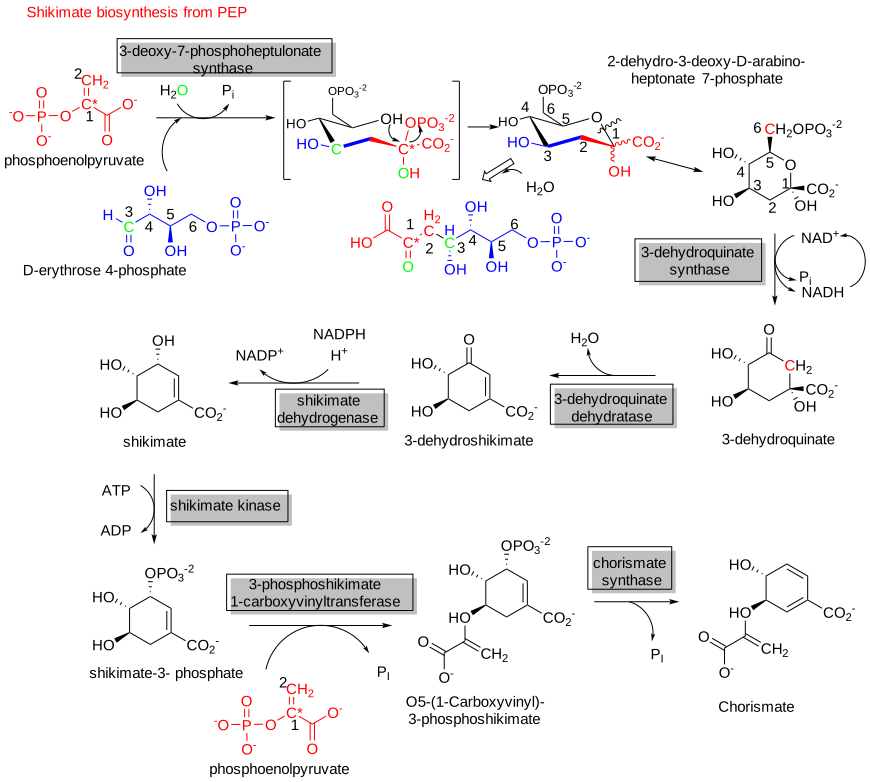
    The synthesis of the first of the biosynthetic pathways for the aromatic amino acids phenylalanine, tryptophan, and tyrosine from phosphoenolpyruvate up to chorismate is shown in Figure \(\PageIndex{4}\).
    Chemical reaction diagram showing molecular structures with red and blue elements, indicating different reactants and products.

    Figure \(\PageIndex{4}\): Synthesis of the first of the biosynthetic pathways for the aromatic amino acids phenylalanine, tryptophan, and tyrosine from phosphoenolpyruvate up to chorismate

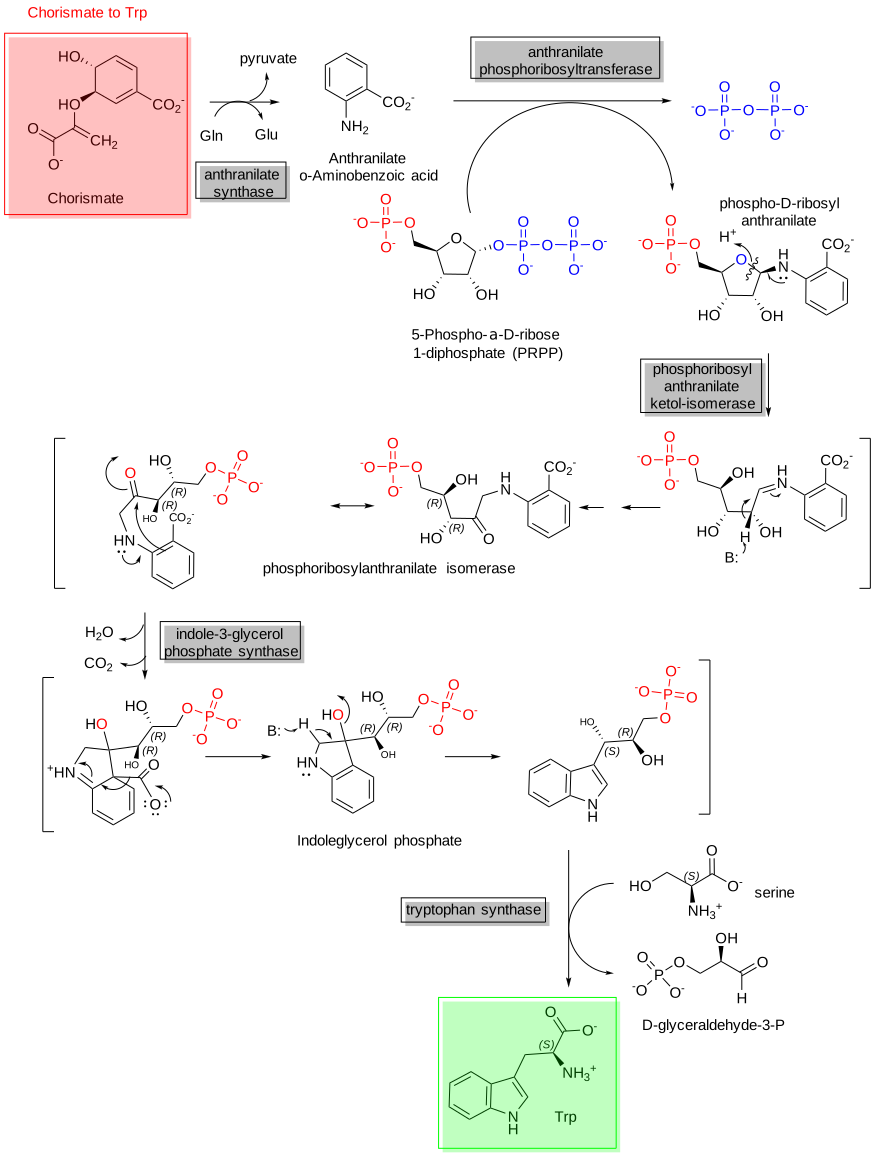
    Chorismate to tryptophan

    The synthesis of the second half of the biosynthetic pathway for tryptophan from chorismate is shown in Figure \(\PageIndex{5}\)
    A diagram showing red and blue shapes arranged in a grid pattern, with red and green bounding boxes around specific groups.

    Figure (\PageIndex{5}\): Synthesis of the second half of the biosynthetic pathways for the aromatic amino acid tryptophan from chorismate

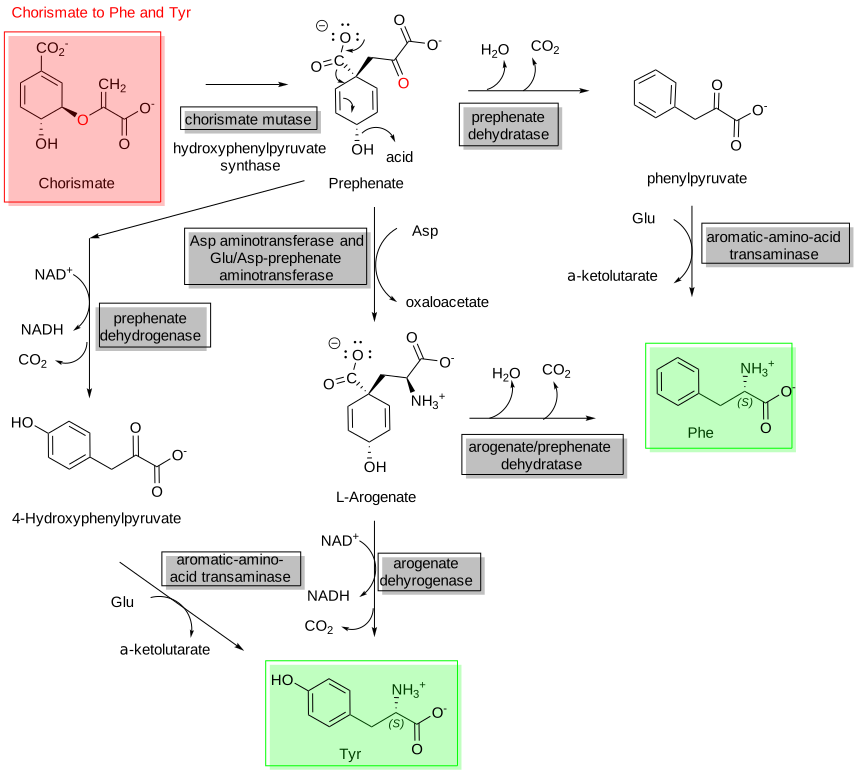
    Chorismate to Phe and Tyr

    The synthesis of the second half of the biosynthetic pathway for phenylalanine and tyrosine from chorismate is shown in Figure \(\PageIndex{6}\)
    A diagram featuring three squares: one red at the top and two green at the bottom, set against a black background.

    Figure \(\PageIndex{6}\): Synthesis of the second half of the biosynthetic pathway for phenylalanine and tyrosine from chorismate

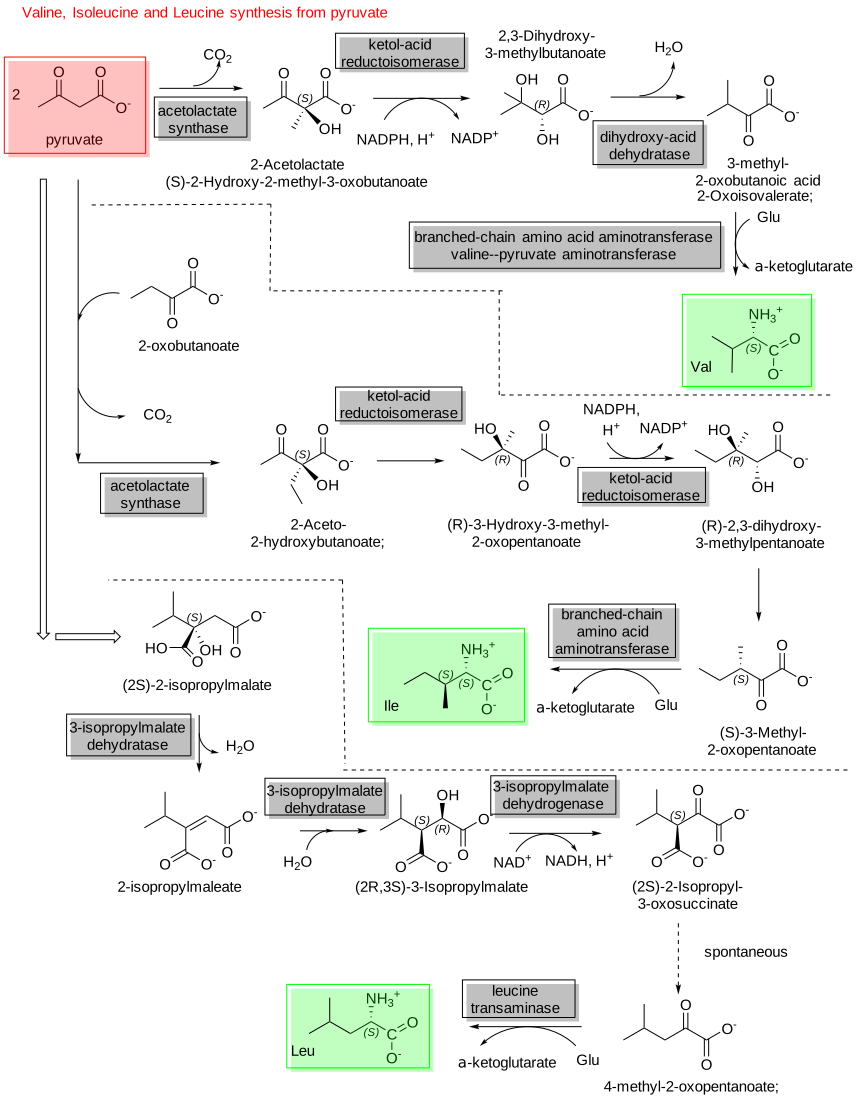
    From Pyruvate: Ala, Val, Leu, Ile

    Alanine can be easily synthesized from the alpha-keto acid pyruvate through a transamination reaction; therefore, we will focus our attention on the other branched-chain nonpolar amino acids, Val, Leu, and Ile.

    The synthesis of valine, leucine, and isoleucine from pyruvate is shown in Figure \(\PageIndex{7}\).
    A diagram featuring three green rectangles and one red rectangle, arranged vertically on a black background.

    Figure \(\PageIndex{7}\): The synthesis of valine, leucine, and isoleucine from pyruvate

    TCA Intermediates

    From α-ketogluatarate: Glu, Gln, Pro, Arg

    Since amino acid metabolism is so complex, it is essential to continually review past learning. Figure \(\PageIndex{8}\) from section 18.2 shows the relationship among Glu, Gln, and keto acids.
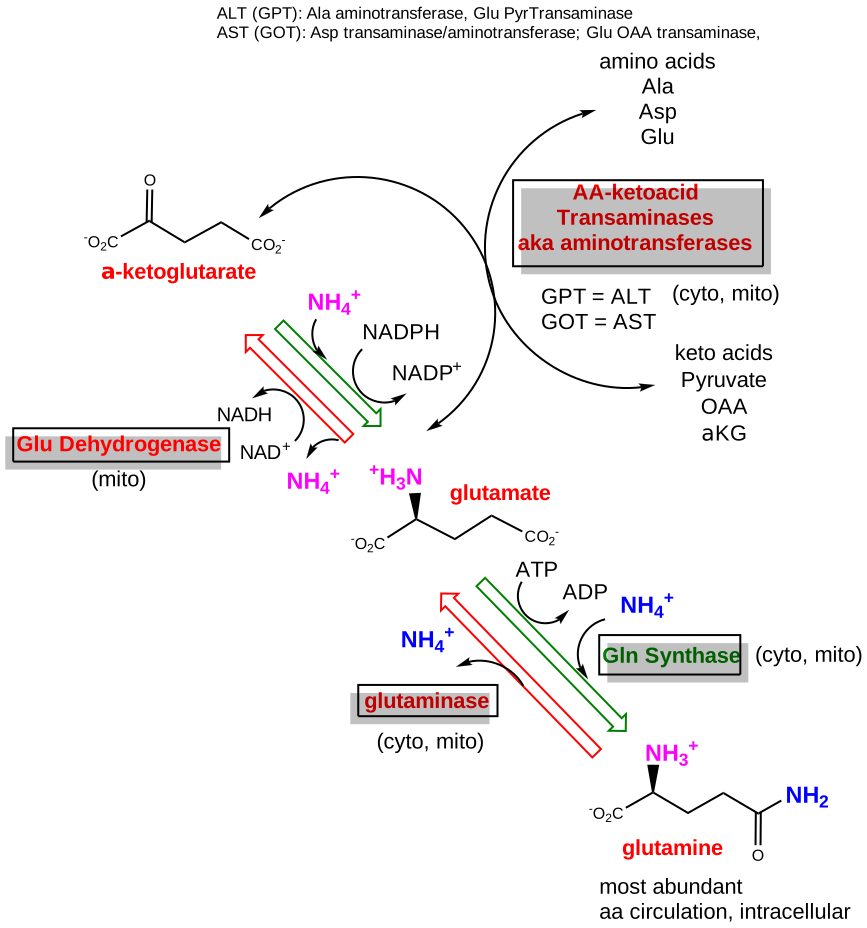
    Diagram illustrating the interaction of two forces, with red and green arrows indicating direction and magnitude.

    Figure \(\PageIndex{8}\): Glutamate and glutamine synthesis from α-ketoglutarate

    As is evident from the figure, glutamic acid can be made directly through the transamination of α-ketoglutarate by an ammonia donor. In contrast, glutamine can be made by the action of glutamine synthase on glutamic acid.

    Arginine is synthesized in the urea cycle, as previously discussed. It can be made from α-ketoglutarate through the following sequential intermediates: N-acetylglutamate, N-acetylglutamate-phosphate, N-acetylglutamate-semialdehyde, N-acetylornithine to N-acetylcitruline. It is deacetylated and enters the urea cycle.

    The pathway for conversion of α-ketoglutarate to proline is shown in Figure \(\PageIndex{9}\).
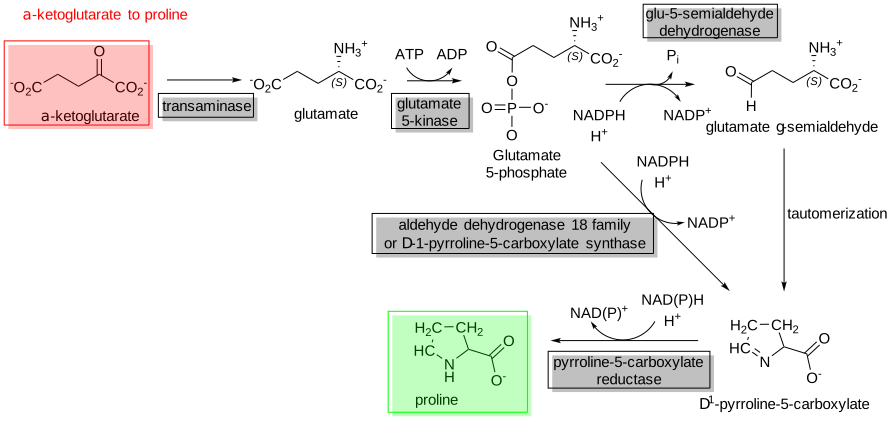
    Diagram showing two squares, one red and one green, positioned in different locations on a graph.


    Figure \(\PageIndex{9}\): Conversion of α-ketoglutarate to proline

    From oxalacetate: Asp, Asn, Met, Thr, Lys

    OAA to Aspartic Acid

    This is a simple transamination

    Aspartic Acid to Asparagine

    This is catalyzed by the enzyme Asparagine Synthase, as shown in the reaction equation below:

    Aspartate + Glutamine + ATP + H2O → Asparagine + Glutamic Acids + AMP + PPi

    Aspartic Acid to Lysine

    There are two pathways.

    • The diaminopimelic acid (DAP) pathway utilizes aspartate and pyruvate, forming diaminopimelic acid as an intermediate. It is found in bacteria, some fungi, and archaea, as well as in plants.
    • The aminoadipic acid (AAA) pathway utilizes α-ketoglutarate and acetyl-CoA to form aminoadipic acid as an intermediate. Fungi use it.

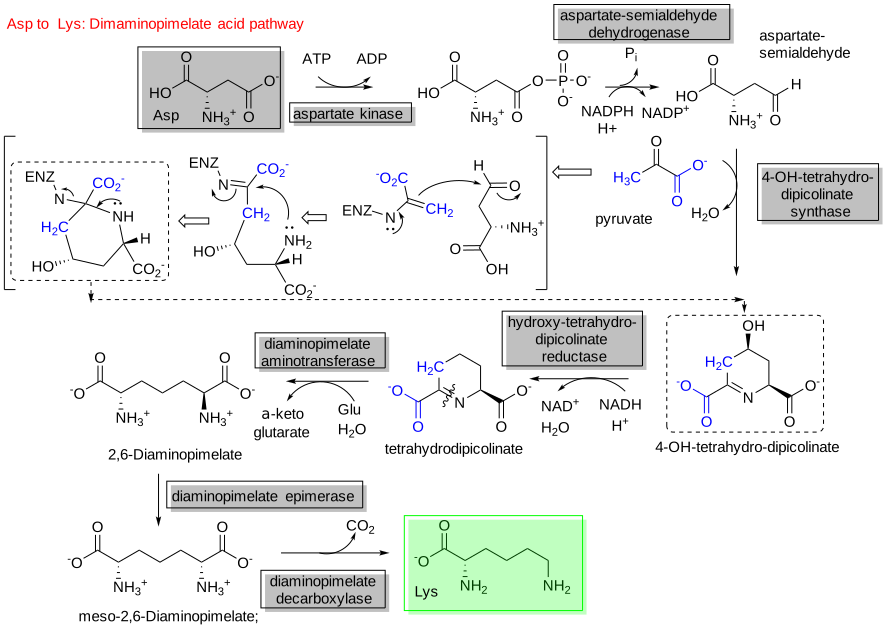
    Here, we present the synthesis of lysine from aspartate and pyruvate using the diaminopimelic acid (DAP) pathway. The pathway is shown in Figure \(\PageIndex{10}\).
    Flowchart showing a process with decision points, labeled actions, and a highlighted green box at the bottom.

    Figure \(\PageIndex{10}\): The synthesis of lysine from aspartic acid in the diaminopimelic acid DAP pathway

    .

    Aspartic acid to Threonine

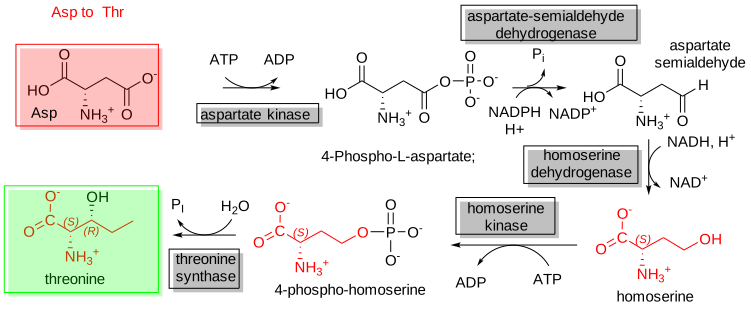
    The conversion of aspartic acid to threonine is shown in Figure \(\PageIndex{11}\).
    Chemical structures outlined in red and green, showing different molecular configurations or reactions.

    Figure \(\PageIndex{11}\): The conversion of aspartic acid to threonine

    Aspartic acid to Methionine

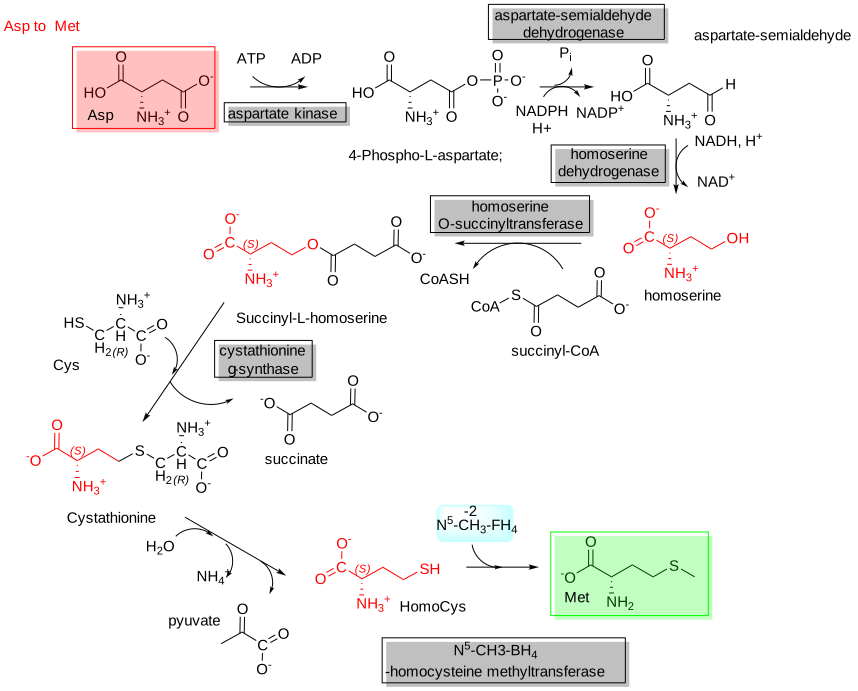
    The conversion of aspartic acid to methionine is shown in Figure \(\PageIndex{12}\).
    Chemical reaction diagram with labeled reactants and products, highlighted sections in red and green.

    Figure \(\PageIndex{12}\): The conversion of aspartic acid to methionine

    This SUMMARY GRAPHIC From Reactome shows "Cellular metabolism of amino acids and related molecules includes the pathways for the catabolism of amino acids, the biosynthesis of the nonessential amino acids (alanine, arginine, aspartate, asparagine, cysteine, glutamate, glutamine, glycine, proline, and serine) and selenocysteine, the synthesis of urea, and the metabolism of carnitine, creatine, choline, polyamides, melanin, and amine-derived hormones. The metabolism of amino acids provides a balanced supply of amino acids for protein synthesis. In the fasting state, the catabolism of amino acids derived from the breakdown of skeletal muscle protein and other sources is coupled to the processes of gluconeogenesis and ketogenesis to meet the body’s energy needs in the absence of dietary energy sources."

    Diagram illustrating various metabolic pathways, including amino acid metabolism, mitochondrial processes, and related compounds.

    Provided by Reactome. Citation Accessed on Wed, May 15, 2024.  Fabregat A, Sidiropoulos K, Viteri G, Marin-Garcia P, Ping P, Stein L, D'Eustachio P, Hermjakob H. Reactome diagram viewer: data structures and strategies to boost performance. Bioinformatics (Oxford, England). 2018 Apr;34(7) 1208-1214. doi: 10.1093/bioinformatics/btx752. PubMed PMID: 29186351. PubMed Central PMCID: PMC6030826.   Image:  https://reactome.org/PathwayBrowser/#/R-HSA-71291&PATH=R-HSA-1430728

    Summary

    In this chapter, we integrate and summarize the biosynthetic pathways that produce the twenty standard amino acids, emphasizing how central metabolic intermediates from glycolysis and the tricarboxylic acid (TCA) cycle serve as key starting points. The amino acids are grouped into nonessential and essential categories, with the understanding that in humans some “conditionally essential” amino acids (such as arginine, methionine, and tyrosine) require supplementation under certain physiological conditions.

    Key Concepts Covered:

    • Central Carbon Metabolism as a Precursor Source:
      Glycolytic intermediates (e.g., glucose-6-phosphate, 3-phosphoglycerate, and phosphoenolpyruvate) and TCA cycle intermediates (e.g., α‑ketoglutarate and oxaloacetate) provide the carbon skeletons for amino acid synthesis. This chapter demonstrates the elegant link between energy metabolism and the generation of biosynthetic precursors.

    • Pathways Originating from Glycolytic Intermediates:

      • From Glucose-6-Phosphate: Histidine is synthesized via a pathway that starts from a phosphorylated ribose derivative.
      • From 3‑Phosphoglycerate: Serine is produced and further serves as a precursor for glycine and cysteine.
      • From Phosphoenolpyruvate: The aromatic amino acids—tryptophan, phenylalanine, and tyrosine—are synthesized via the shikimate pathway up to chorismate, from which distinct branch pathways lead to each aromatic amino acid.
    • Pathways Originating from Pyruvate:
      Alanine is formed directly from pyruvate by transamination, while the branched‐chain amino acids (valine, leucine, and isoleucine) are generated through a series of reactions involving pyruvate condensation and further modifications.

    • TCA Cycle-Derived Pathways:

      • From α‑Ketoglutarate: Glutamate is synthesized by transamination and serves as a hub for the formation of glutamine, proline, and arginine. Arginine’s synthesis is closely linked to the urea cycle.
      • From Oxaloacetate: Aspartate, produced by transamination, is the precursor for several amino acids including asparagine, threonine, methionine, and lysine. Notably, lysine can be synthesized via the diaminopimelic acid (DAP) pathway in plants and bacteria or via the aminoadipic acid pathway in fungi.
    • Integration into Overall Metabolism:
      The chapter also highlights that amino acids are not only the building blocks of proteins but are interwoven into energy metabolism. For example, during fasting or stress, when carbohydrates are scarce, amino acids can be catabolized (after removal of their amino groups) to feed into glycolysis or the TCA cycle. This interconversion is critical since, unlike carbohydrates and lipids, proteins cannot be stored in large quantities.

    • Systems-Level Perspective:
      A summary graphic (provided by Reactome) encapsulates how amino acid metabolism connects with protein synthesis, urea cycle, and various other metabolic pathways, underscoring the central role of amino acids in both anabolic and catabolic processes.

    Conclusion:

    This chapter provides a cohesive overview of the multiple biosynthetic routes leading to amino acids, emphasizing the central role of glycolytic and TCA cycle intermediates as precursors. Understanding these pathways is crucial not only for grasping the fundamentals of cellular metabolism but also for appreciating how alterations in amino acid biosynthesis can affect overall metabolic homeostasis in both health and disease.

    These learning goals and the summary serve to prepare you to:

    • Trace the Carbon Flow: Map how central metabolic intermediates are diverted into specific amino acid biosynthetic pathways.
    • Differentiate Pathways: Distinguish between the different precursor sources and understand the unique steps leading to various amino acid classes.
    • Integrate Metabolic Networks: Appreciate how amino acid synthesis is interconnected with energy metabolism and nitrogen balance, which is essential for overall cellular function.
    • Apply Biochemical Principles: Utilize principles such as transamination, redox reactions, and metabolic regulation in the context of amino acid biosynthesis.

    This page titled 22.2: Biosynthesis of Amino Acids is shared under a not declared license and was authored, remixed, and/or curated by Henry Jakubowski and Patricia Flatt.