

18.2: Metabolic Fates of Amino Groups
- Page ID
- 15032


From the previous section on the nitrogen cycle, it should be clear that NH3/NH4+ has a central role in metabolism. Nature's fertilizer for plants is ammonium derived from bacterial nitrogenase and human-derived Born-Haber process. Animals get their ammonia mostly from ingested plants (primary producers) and animal protein. In vertebrates, proteins get digested into small proteins and peptides starting in the stomach where pepsin cleaves proteins after aromatic and Leu side chains into smaller fragments. The low pH in the stomach (1-2) facilitates protein unfolding, which allows great access to buried side chains for pepsin cleavage. As the ingested materials move into the small intestine, the protein fragments are further cleaved into small peptides by trypsin, and chymotrypsin and then into individual amino acids by carboxypeptidases (which cleaves C-terminal amino acids) and aminopeptidases (which cleave at the N-terminal end). The individual amino acids are then adsorbed, along with di- and tripeptides into the epithelial cells lining the small intestine. Peptidases cleave short peptides and amino acids are moved into the blood through cell membrane transporters which are coupled to sodium ion intake. Amino acids are taken up by tissues for use in protein synthesis and by the liver of vertebrates for metabolic processing. The gut proteolytic enzymes are secreted into the gut lumen as precursors (proenzymes), where they are activated either autocatalytically or by other proteases into their mature form.
Amino acids are also derived from the degradation of cellular proteins by a supramolecular assembly called the proteasome. Proteins designated for cleavage are covalently modified by ubiquitin, a short ubiquitous protein, which targets them to the proteasome.
Degradation of amino acids to produce ammonium
Here is some good advice on giving a seminar: tell what you will tell them, tell them and tell them what you told them. These words imply that repetition is one of the keys to learning. So look at Figure \(\PageIndex{1}\) which shows an overall view of the glycolytic and TCA pathways and see how amino acid catabolism fits into what you already know!
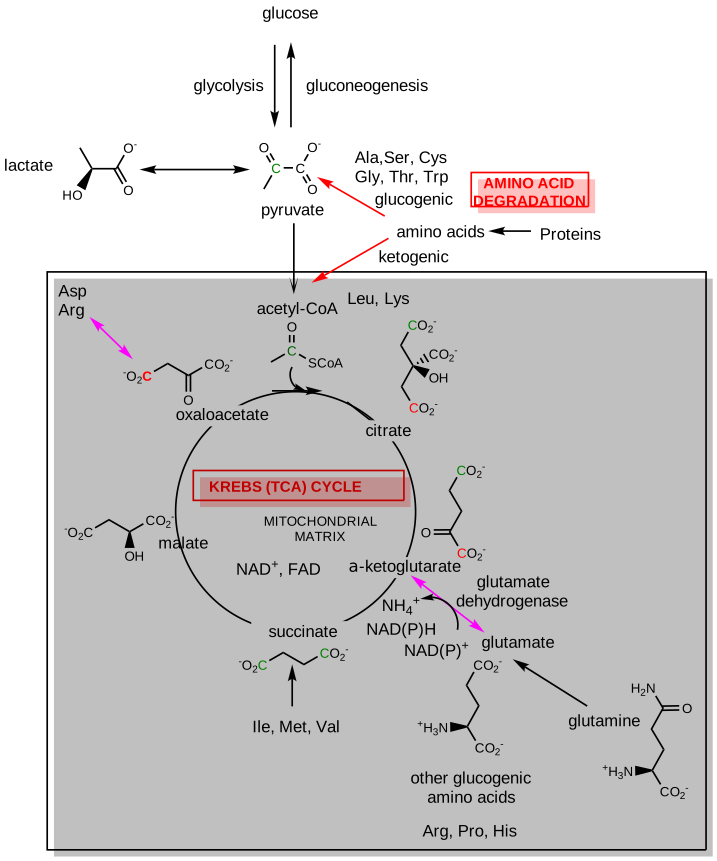
Figure \(\PageIndex{1}\): Amino acids and their involvement with the glycolytic and TCA pathways
A summarizing principle is that amino acids degrade to form intermediates that fit into these two common pathways and can be used for ATP production as well as biosynthesis. Those that form pyruvate are glucogenic amino acids, while those that form acetyl-CoA are ketogenic (form ketones and could form ketone bodies as well). Many form direct intermediates in the TCA cycle.
This chapter will focus on glutamine/glutamic acid, alanine (which forms pyruvate), and aspartic acid. In this section, we will focus on the role of amino acid catabolism in producing ammonium. When new students confront the structures, properties, and reactions of amino acids, they are undoubtedly daunted. Even biochemists would be if amino acid metabolism is outside their active research area. Perhaps some interesting biological properties of free amino acids might pique your interest. For example, did you know that ...
- glutamate and glutamine are the most abundant amino acids in red blood cells;
- alanine and glutamine are the most abundant amino acid in the body;
- glutamic acid, glutamine, and alanine are the most abundant amino acids in the cerebrospinal fluid CSF (50-55% of total amino acids);
- glutamine is the most abundant amino acid in blood serum;
- In contrast, leucine is the most abundant amino acid in proteins, and free leucine is a prime regulator of protein synthesis through its interaction with the mTOR kinase complex. The other top three amino acids in proteins are serine, lysine, and glutamic acid.
From the above list, it appears that Glu and Gln play special roles in metabolism and signaling. They also play major roles in ammonium metabolism as the pair are major sources of NH4+ production in cells. Gln has two Ns (an amine and an amide), so it's not an unexpected source of nitrogen:
- Glutamine can give up its amide nitrogen to form NH4+ on conversion to glutamic acid, a reaction catalyzed by glutaminase
- Glutamic acid can undergo oxidative deamination to form α-ketoglutarate (a TCA intermediate) and free NH4+, a reaction catalyzed by glutamate dehydrogenase
- Glutamic acid can also give up its ammonia nitrogen to a ketoacid like pyruvate to form α-ketoglutarate (a TCA intermediate) and another amino acid (alanine if pyruvate was used as the keto acid), a reaction catalyzed by a class of enzymes called transaminases (makes sense again), which are also called aminotransferases. In this case, free NH4+ is not formed but rather is passed to a keto acid to form another amino acid.
In vertebrates, free amino acids are metabolized in the liver. Amino acids that enter the liver transfer their ammonia group to α-ketoglutarate (aka 2-oxoglutarate) to form glutamic acid which enters the mitochondria and can be cleaved by glutamate dehydrogenase to form α-ketoglutarate and free ammonium. The NH4+ produced is either recycled or excreted in the form of NH4+ in fish, urea, H2N(C=O)NH2 in vertebrates, and uric acid in birds and reptiles. Excess amino acids (which again can't be stored for energy) in other organs pass their ammonia group to glutamic acid to form glutamine, which then heads to the liver for processing. Glutamine then becomes a safe way to transfer 1-2 ammonium equivalents through the blood.
Alanine and aspartic acid also play secondary roles. Ala is one transamination step away, through the removal of its amine group, from pyruvate, a crucial α-ketoacid end product of glycolysis and entry product for the TCA cycle (after pyruvate dehydrogenase). In muscle, excess amino acids pass their ammonia groups to pyruvate to form alanine, another "safe" carrier of ammonium, which heads to the liver for processing. Likewise, aspartic acid is one transamination step way, through the removal of its amino group, to form oxaloacetate, another TCA α-ketoacid.
Figure \(\PageIndex{2}\) shows the key α-keto acids which are also intermediates of the TCA cycle or feed into it (pyruvate) and their respective transamination amino acid products. Their structures immediately show a link between amino acid and carbohydrate metabolism.
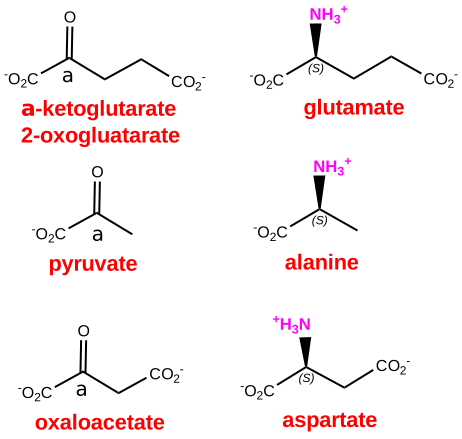
Figure \(\PageIndex{2}\): α-ketoacids and their transamination amino acid products
We will focus most of our attention on glutamine and glutamic acid. Figure \(\PageIndex{3}\) summarizes the important enzymatic steps in the conversion of Gln ↔ Glu ↔ α-KG
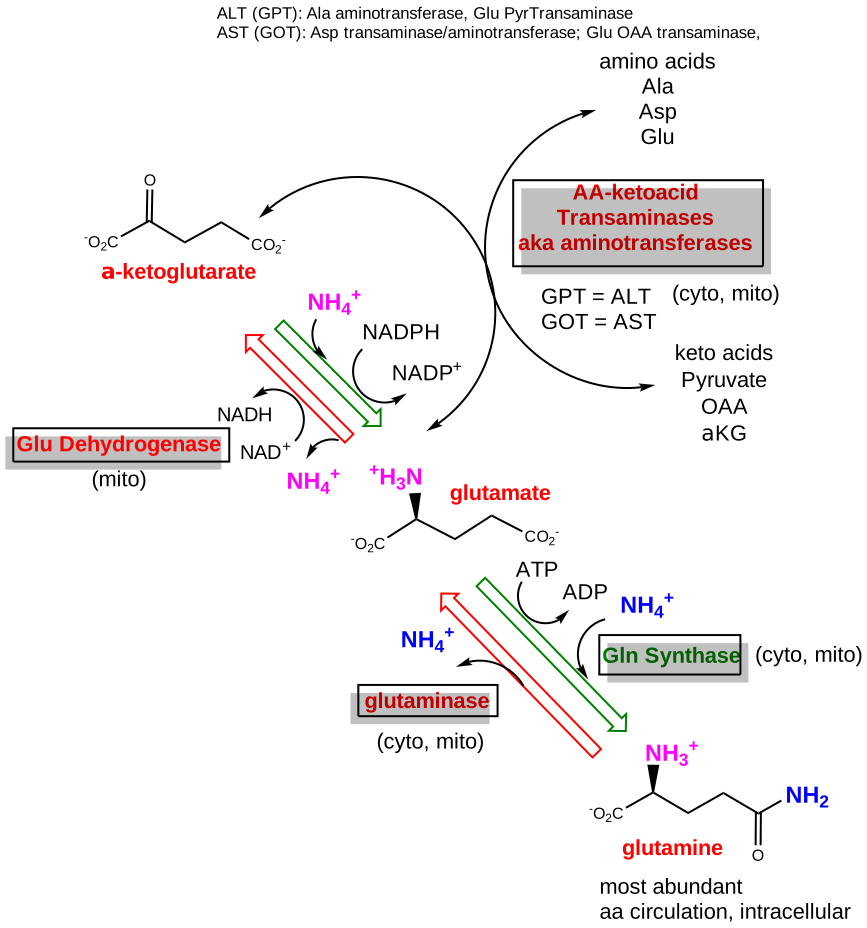
Figure \(\PageIndex{3}\): Important enzymatic steps in the conversion of Glutamine ↔ Glutamic acid ↔ α-ketoglutarate
Pyridoxal phosphate and transamination reactions
Most free amino acids start their metabolic degradation in the liver with transamination reactions, using PLP as a cofactor. PLP enables other biochemical reactions of amino acids, including racemizations, decarboxylation, and dehydration (of serine). PLP is covalently attached to a Lys through a Schiff base linkage in the enzyme during the reaction cycle so it is not considered a substrate, but rather a cofactor that returns to its original state after the reaction.
Figure \(\PageIndex{4}\) shows the structure of PLP and the imine formed on reaction with an amino acid. The reaction is readily reversible through hydrolysis in the presence of water which would presumably not be present in the active site of PLP-dependent enzymes. A lysine ammonia group in the enzyme forms a covalent adduct with PLP to form an imine. The imine in the figure below is called an internal aldimine. Internal implies that the source of the N in the imine link is a Lys internal to the protein. If in your mind you would replace the N in the imine with an O, the functional group with the C=O would be an aldehyde. Hence the imine shown is an aldimine.
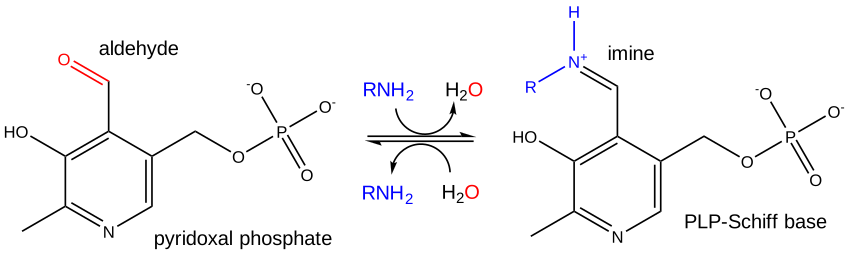
Figure \(\PageIndex{4}\): PLP and its imine-protein conjugate
William Jencks, in his classic text, Catalysis in Chemistry, describes the mechanistic beauty of PLP-dependent enzymes:
"It has been said that God created an organism especially adapted to help the biologist find an answer to every question about the physiology of living systems; if this is so, it must be concluded that pyridoxal phosphate was created to provide satisfaction and enlightenment to those enzymologists and chemists who enjoy pushing electrons, for no other coenzyme is involved in such a wide variety of reactions, in both enzyme and model systems, which can be reasonably interpreted in terms of the chemical properties of the coenzyme. Most of these reactions are made possible by a common structural feature. That is, electron withdrawal toward the cationic nitrogen atom of the imine and into the electron sink of the pyridoxal ring from the alpha carbon atom of the attached amino acid activates all three of the substituents of this carbon for reactions which require electron withdrawal from this atom."
When PLP-dependent enzymes react with an external amino acid acting as a substrate, the amine of the incoming amino acid replaces the amine from the enzyme's active Lys to produce an external imine. The figure below shows an external amino acid in imine linkage to PLP, and in the form shown is an aldimine.
Each PLP-dependent reaction involves a protonated and positively charged pyridinium N as an electron sink, which facilitates cleavage of each bond around the Cα of the covalently attached amino acid. Bond cleavage would leave a lone pair and negative charge on the α-carbon and no place to stabilize it by resonance. On the formation of a Schiff base with a pKa of around 7.0, the imine nitrogen, especially in its protonated form, is an excellent stabilizer of the negative charge. Continued delocalization of the lone pair and negative charge to the positive pyridinium nitrogen further facilitates the stabilization and hence the reaction. Figure \(\PageIndex{5}\) shows the cleavage of bonds around the Cα of an amino acid-PLP Schiff base.
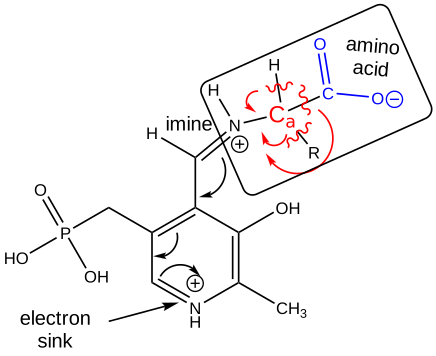
Figure \(\PageIndex{5}\): Cleavage of bonds around the Cα of an amino acid-PLP Schiff base
Figure \(\PageIndex{6}\) shows the mechanism for a transamination reaction using PLP as a cofactor. This is of course the reaction most relevant to this chapter section. The amino acid substrate is first shown in an aldimine linkage to PLP. Also, note the conversion of an aldimine to a ketimine in the next step.
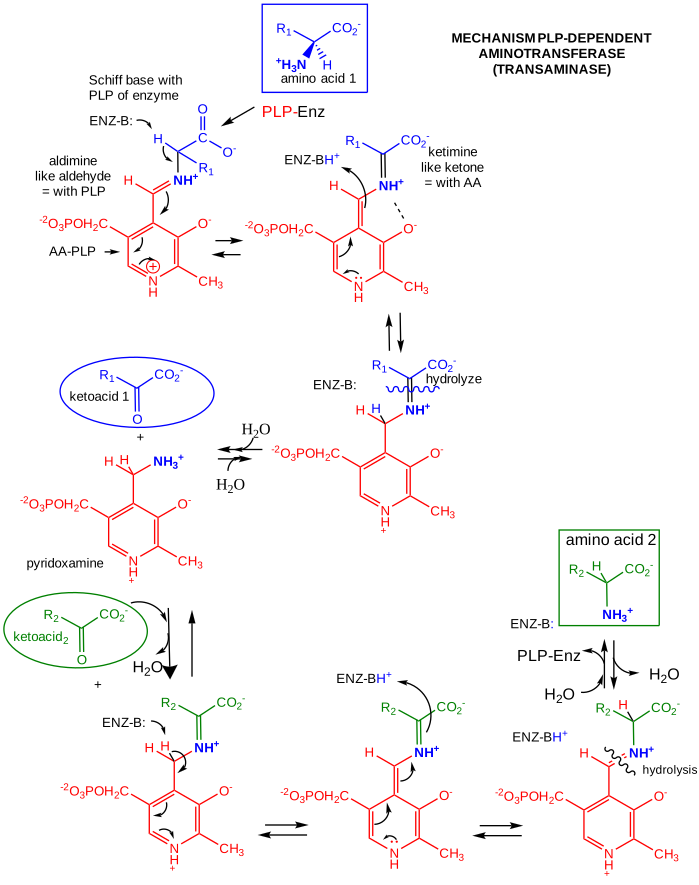
Figure \(\PageIndex{6}\): Mechanism for a transamination reaction using PLP as a cofactor
The model below shows the active site of aspartate transaminase from E. Coli (pdb code 1aam) with PLP in Schiff base linkage with lysine 258. Three amino acids critical for enzyme function (Trp 142, Asp 223, and Lys 258) and all side chains within 5 angstroms from the active site defined by those amino acids, are shown. Lys 258 forms the Schiff base with PLP cofactor and also acts as a general acid/base on interconversion between the aldimine and ketamine forms (see figure above). The ring of Trp 142 forms pi-stacking interactions with the aromatic ring of PLP and helps position it. Asp 223 acts as a general acid/base in the catalytic cycle, facilitating the deprotonation of the amine group of the substrate Asp, which makes it a potent nucleophile in the formation of the external aldimine.
Figure \(\PageIndex{7}\) shows an interactive iCn3D model of the active site of aspartate transaminase from E. Coli with PLP (1aam)
.png?revision=1&size=bestfit&width=356&height=269)
 Figure \(\PageIndex{7}\): Active site of aspartate transaminase from E. Coli with PLP (1aam). (Copyright; author via source). Click the image for a popup or use this external link: https://structure.ncbi.nlm.nih.gov/i...YeQ6kah4EuERT9
The various names and abbreviations for transaminases/aminotransferases (which are reversible) can be confusing. Two key ones whose levels are used to assess liver toxicity in clinical tests are AST (GOT) and ALT (GPT).
- ASpartate Amino Transferase (AST) is the same enzyme as Glutamate Oxalacetate Transaminase (GOT), named for the reverse reaction:
aspartate + α−ketoglutarate ↔ oxalacetate + glutamate
- ALanine Amino Transferase (ALT) is the same enzyme as Glutamate Pyruvate Transaminase (GPT), named for the reverse reaction:
alanine +α−ketoglutarate ↔ pyruvate + glutamate
We will consider other reactions of PLP-dependent enzymes when needed.
To summarize, different amino acids coming into the liver can donate their amine groups to α-ketoglutarate to form glutamic acid in a reaction catalyzed by a transaminase/aminotransferase to form glutamic acid.
Production of NH3 - Glutamate Dehydrogenase
Now that we made glutamic acid from various amino acids, we can now break it down to make α-ketoglutarate again and ammonium. The overall reversible reaction catalyzed by the enzyme glutamate dehydrogenase in mitochondria is shown in Figure \(\PageIndex{8}\). Mammalian livers can also use NADP+ as an oxidizing agent.
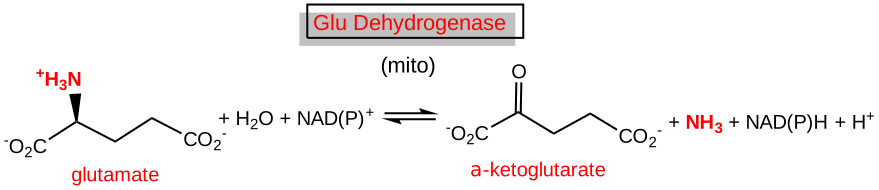
Figure \(\PageIndex{8}\): Overall reversible reaction catalyzed by the enzyme glutamate dehydrogenase in mitochondria
Humans have two isozymes. GluDH1 is expressed at high levels in the liver, brain, pancreas, and kidney, while GluDH2 is found in the retina, testes, and brain. GluDH1 can use both NAD+ and NADP+ so it can be used in both anabolic and catabolic reactions.
The reaction/product pairs again show this reaction to be a clear link between protein and carbohydrate metabolism. Figure \(\PageIndex{9}\) shows just the first step in the reaction of glutamate dehydrogenase.
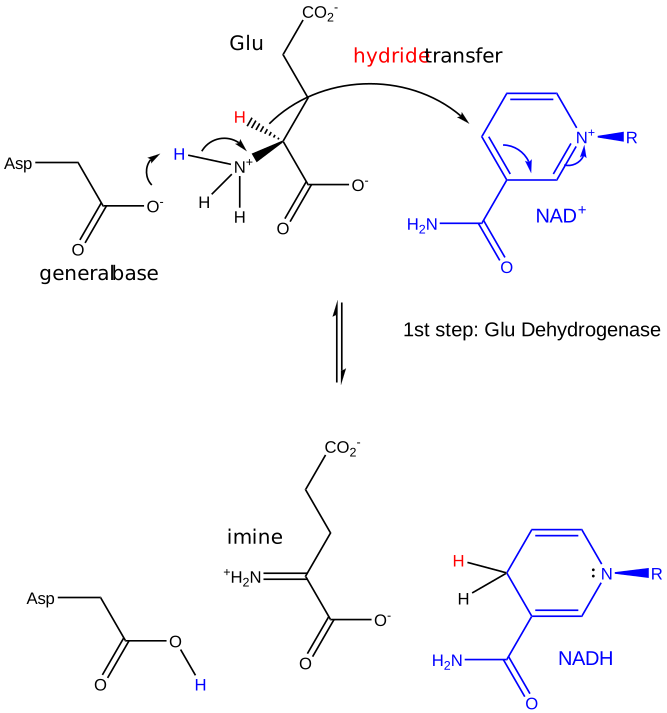
Figure \(\PageIndex{9}\): First step in the reaction of glutamate dehydrogenase
The C-N in Glu becomes C=N in the imine intermediate. You should recognize this as an oxidation step even if the obvious oxidizing agent, NAD(P)+, was not shown. That should also be evident since a hydride (H-) with a lone pair is removed from glutamic acid and not a H+ as in an acid/base reaction. Subsequent steps include nucleophilic attack by water (enhanced by a proximal Lys acting as a general base) on the imine C followed by ammonia release on the formation of alpha-ketoglutarate. The overall reaction is an oxidative deamination.
NH3/NH4+ are toxic in high concentrations. One possible reason is that the NH4+ cation might compete with the transport of other ions across neural membranes, altering transmembrane potentials and hence neural function. Given this toxicity, you expect that glutamate dehydrogenase is highly regulated and it is in mammals. The mammalian enzyme is a hexamer of identical subunits which suggests allosteric regulation of activity (much like tetrameric hemoglobin). ADP and leucine are allosteric activators while GTP, palmitoyl CoA, and ATP act as inhibitors. The GTP/ADP regulation is consistent with the notion that the enzyme is regulated by the need for cellular energy (remember that GTP is formed in the TCA cycle).
Although this reaction is written above in the direction of NH3 formation, the reaction is reversible, even though the ΔG0=-6.2 kcal/mol (-26 kJ/mol) and though the human enzymes have a high Km for ammonia (12-62 mM, Brenda Database). As the pH decreases from 8 to 7, the Km for ammonia increases from around 12 to 60 mM. This implies that on glutamate uptake and in acidotic conditions, the reaction runs exclusively in the direction of NH3 release - as an oxidative deamination reaction.
Transporting ammonium equivalents in the blood - Glutamine and Alanine
NH3/NH4+ are toxic in high concentration, mechanisms must be in place to transport it in the blood. Ideally, it would be transported in a nontoxic form. Glutamic acid is a key metabolic molecule so glutamine is the preferred molecule for safe "NH3/NH4+" transport from tissue to the liver, while alanine is the choice for muscle tissue. In a way, this less toxic mode of transport is similar in principle to the use of soluble ketone bodies to transport the energy equivalent of the less soluble fatty acids in the blood.
A key enzyme for this process is glutamine synthetase, which catalyzes this reaction:
NH4+ + ATP + Glu → Gln + ADP + HPO42- + H+
This reaction is important as most ingested glutamine is converted to glutamate on absorption.
NH3/NH4+ made in the intestine and kidney ends up in the circulation where it heads to the liver for the eventual production of urea.
Figure \(\PageIndex{10}\) shows the Glucose-Alanine Cycle in comparison to the Cori cycle we discussed in a previous chapter.
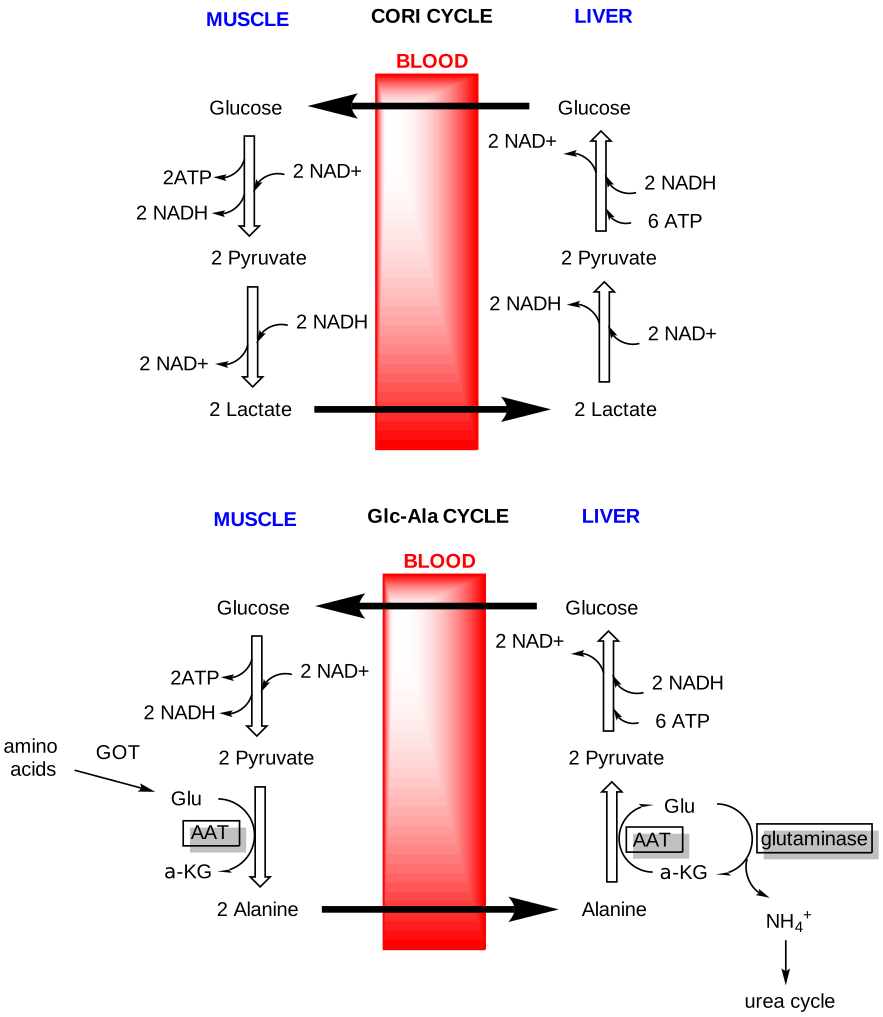
Figure \(\PageIndex{10}\): Glucose-Alanine Cycle in comparison to the Cori cycle
Production of NH3 - Glutaminase
Most amino acids arriving in the liver for degradation go through two enzymes, transaminases to form glutamic acid followed by glutamate dehydrogenase to form a TCA intermediate (alpha-ketoglutarate) and ammonia. Glutamine is a carrier of excess ammonia in the bloodstream (see below). When it arrives in the liver, it can lose its amide NH2 as ammonium as it is converted to glutamic acid by the enzyme glutaminase, a nonoxidative enzyme that is expressed in the liver, brain, and kidney. Some of the glutamate can lose ammonia by the enzyme glutamate dehydrogenase, but most is reserved for protein synthesis or the creation of anabolic precursors.
As mentioned above, glutamine is the most abundant free amino acid in the body and most cells. It can donate its amide N through reactions catalyzed by amidotransferase (not to be confused with aminotransferases) leading to the incorporation of nitrogen into many biomolecules.
Metabolic Summary
- Glutamine is both a carrier of ammonia and a carbon backbone used in metabolism when converted to α-ketoglutarate. It can be metabolized for energy and used in biosynthesis for nucleotides and neurotransmitters. As such its levels are controlled by glutamine synthase and glutaminase. When we get to synthetic pathways, you will find that glutamine is a NH3/NH4+ donor for the synthesis of other amino acids as well as nucleotides, amino sugars, and NAD+.
- Glutamine that is absorbed in the intestines is mostly converted to glutamic acid in the intestinal epithelial cells and is transported by the blood. The rest heads to the liver for processing. Hence most glutamine must be synthesized by glutamine synthase, a cytosolic enzyme found in most mammalian cells. However, it is most abundant in muscle, liver, and adipose cells which express little glutaminase and from which it can be exported. Glutaminase in the liver and kidney leads to ammonium production
- Glutamine is used as a source of energy and carbon for biosynthesis by tumor cells, which need both energy and intermediates for synthesis by rapidly proliferating cells. Aerobic glycolysis ("Warburg effect") allows that to occur.