

12.2: Phosphoryl Group Transfers and ATP
- Page ID
- 14999


ATP and Phosphoryl Transfer reactions
Biological oxidation reactions serve two functions, as described in the previous chapter. Oxidation of organic molecules can produce new molecules with different properties. For example, increases in solubility are observed on the hydroxylation of aromatic substrates by cytochrome P450 (which we will explore in another chapter section). Likewise, amino acids can be oxidized to produce neurotransmitters. Many biological oxidation reactions occur, however, to produce energy to drive thermodynamically unfavored biological processes such as protein and nucleic acid synthesis, or motility. Chemical potential energy is not just released in biological oxidation reactions. Rather, it is transduced into a more useful form of chemical energy in the molecule ATP (adenosine triphosphate). We will discuss the properties that make ATP so useful biologically, and how exergonic biological oxidation reactions are coupled to the synthesis of ATP.
ATP is used universally as a "carrier" of free energy, which effectively means that it has a high free energy compared to its hydrolysis reaction products. Using alternative language, ATP has a high-energy transfer potential. The structure of ATP and a simplified reaction mechanism for the cleavage of the terminal (γ) phosphoanhydride bond by water (hydrolysis) or an alcohol (alcoholysis) is shown in Figure \(\PageIndex{1}\) below.
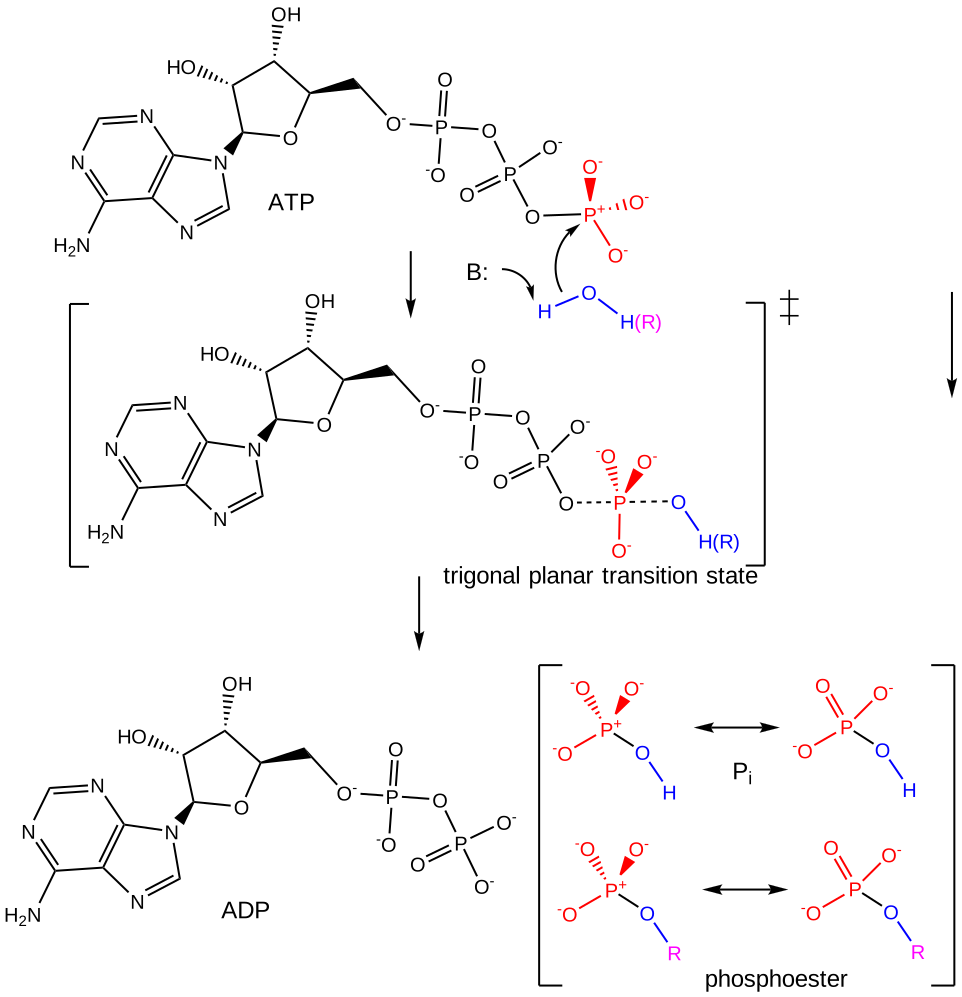
The reaction is also a nucleophilic substitution. Changing perspectives, the water or alcohol is phosphorylated by ATP. Hence the reaction can also be called a phosphoryl transfer. In Chapter 6.5, we can see that two different Enzyme Commission numbers might apply to reactions involving ATP. These are
- EC2 - transferases: transfer/exchange of group from one molecule to another. More specifically they are in category EC2.7 - transferring phosphorus-containing groups
- EC3- hydrolases: hydrolysis reactions. More specifically they are in category EC3.6 - acting on acid anhydrides
Most of the examples in this book would best be classified as phosphoryl transfer reactions.
The terminal phosphate is shown in an alternative resonance form with the P atom sp3 hybridized with tetrahedral geometry and a +1 formal charge. The attack on the electrophilic P atom by the incoming nucleophile leads to the formation of a trigonal planar transition state with the dashed lines representing bond formation and breaking in an SN2-like reaction. The final products are ADP and either inorganic phosphate (Pi) or a phosphoester.
The hydrolysis reaction can be represented by a chemical equation or by a more typically written "biochemical" equation. Here is the chemical equation as recommended by the IUBMB/IUPAC:
\[\ce{ATP^{4-}(aq) + 2H2O (l)<=> ATP^{3-}(aq) + HPO4^{2-} (aq) + H3O^{+} (aq)} \nonumber\]
This equation is written to have both charge and mass balance. For example, the sum of charges on the left-hand side (-4) is the same as on the right-hand side (-4).
Of course, this is even a simplified equation since the reaction depends on the pH and the presence of divalent cations such as Mg2+. Other species that could be included just for ATP4- include HATP3−, H2ATP2−, MgHATP−, and Mg2ATP, for example. The actual equilibrium constant would depend on the pH, the concentration of Mg2+, and the total ionic strength of the solution. If these were all fixed, the reaction could be written as a simplified biochemical equation as shown below:
\[\ce{ATP + H2O <=> ADP + Pi} \nonumber\]
We will most often use simplified biochemical equations when discussing metabolism.
Just as there are standard state conditions for chemical reactions (1 bar pressure for a gas, 1 M for a solute in solution), there are biochemical standard states for biochemical reactions. They are pressure = 1 bar, pH = 7 (i.e. H3O+=10-7 M), Mg2+ = 1 mM, and ionic strength of either 0 or 0.25 M.
ATP contains two phosphoanhydride bonds (connecting the 3 phosphates) and one phosphoester bond (connecting a phosphate to the ribose ring). The pKas for the reactions HATP3- → ATP4- + H+ and HADP2- → ADP3- + H+ are about 7.0, so the overall charges of ATP and ADP at physiological pH are -3.5 and -2.5, respectively. Each of the phosphorous atoms is highly electrophilic and can react with nucleophiles like the OH of water or an alcohol.
As we discussed earlier, anhydrides are thermodynamically more reactive than esters which are more reactive than amides. The large negative ΔGo (-7.5 kcal/mol, -31kJ/mol) for the hydrolysis of one of the phosphoanhydride bonds can be attributed to relative destabilization of the reactants (ATP and water) and relative stabilization of the products (ADP = Pi). Specifically
- The reactants can not be stabilized to the same extent as products by resonance due to competing resonance of the bridging anhydride O's.
- The charge density on the reactants is greater than that of the products
- Theoretical studies show that the products are more hydrated than the reactants.
The ΔGo for hydrolysis of ATP is dependent on the divalent ion concentration and pH, which affect the stabilization and the magnitude of the charge states of the reactants and products.
Carboxylic acid anhydrides are even more unstable to hydrolysis than ATP (-20 kcal/mol, -84 kJ/mol), followed by mixed anhydrides (-12 kcal/mol, -50 kJ/mol), and phosphoric acid anhydrides (-7.5 kcal/mol. -31 kK/mol). The terminal anhydride bond is often called a "high energy bond". This is absolutely wrong and has created deep misconceptions about molecules like anhydrides. What is true is that the anhydride reactants are high energy but only compared to the energy of their cleavage products, such that the reaction proceeds with a large negative ΔGo.
There is no such thing as a high-energy bond. All covalent bonds lower the energy of a system of two separated atoms. Figure \(\PageIndex{2}\) shows molecules that are high energy compared to their hydrolysis products. Think of a graph of free energy. Carboxylic acid anhydrides and water (the reactants) have high energy compared to their collective products, two acetic acids, for example.
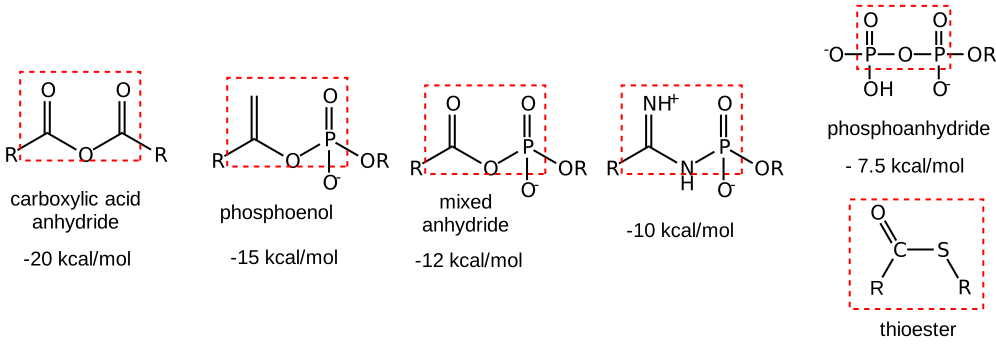
Figure \(\PageIndex{2}\): Molecules that are high energy compared to their hydrolysis products.
Some older books state that the terminal anhydride bond is "high energy". There is no such thing as a "high energy" bond. When a bond forms between two molecules, the energy is lowered. Energy input is required to break any bond.
Each of the molecules above except the thioester has a similar motif outlined with the red dotted rectangle. The thioester also is considered high energy compared to its hydrolysis product since the reactant is effectively destabilized compared to a carboxylic acid ester. This arises because the sulfur atom is larger in the thioester than the oxygen atom in the carboxylic acid ester. Hence the bond length of C-S (1.82 Å )is larger than for C-O (1.43 Å), so the C-S bond is weaker. In addition, the lone pairs on the S, which is more polarizable than O, are less likely to be shared with the C as part of the resonance stabilization of the ester. Both effects raise the energy of the thioester compared to the carboxylic acid ester. The hydrolysis products of both esters are of similar energy. Hence the ΔGo for the hydrolysis of the thioester is more negative and about the same for the hydrolysis of ATP.
How can ATP be used to drive thermodynamically unfavored reactions? First consider how the hydrolysis of a carboxylic acid anhydride, which has a ΔGo = -12.5 kcal/mol (-52 kJ/mol) can drive the synthesis of a carboxylic acid amide, with a ΔGo = + 2-3 kcal/mol (+ 4-12 kJ/mol). The reaction is:
anhydride + amine --> amide + carboxylic acid
This can be broken into two reactions, the hydrolysis of the anhydride, and the synthesis of the amide as shown in Figure \(\PageIndex{3}\).
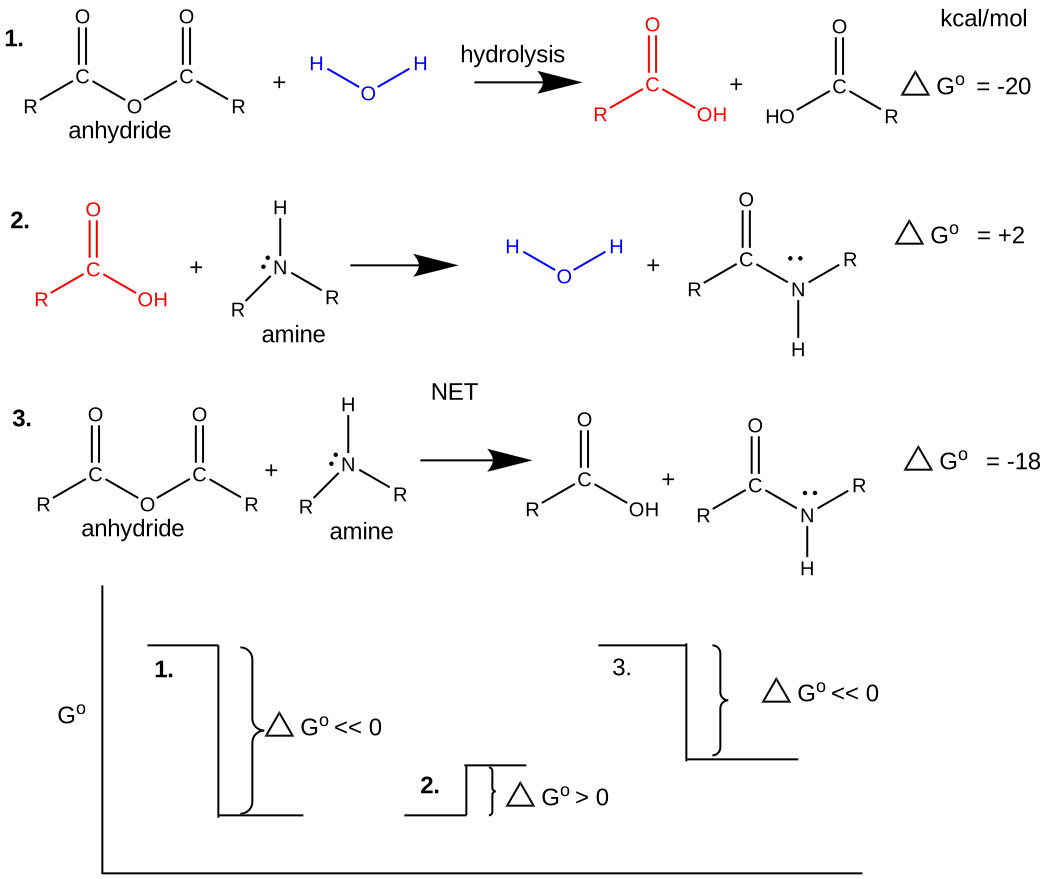
Figure \(\PageIndex{3}\): Individual and net reactions for the conversion for the formation of an amide from an anhydride and an amine
Now consider the reaction of glucose + Pi to form glucose-6-P. In this reaction, a phosphoester is formed, so the reaction would proceed with a positive ΔGo = 3.3. Now if ATP was used to transfer the terminal (gamma) phosphate to glucose to form Glc-6-P, the reaction proceeds with a ΔGo = -4.2 kcal/mol (-17.6 kJ/mol). This can be calculated since ΔG and ΔGo are state functions and path independent. Adding the reactions and the ΔGos give:
- glucose + Pi → glucose-6-P, ΔG0 = 3.3
- ATP + H2O → ADP + Pi , ΔG0 = -7.5
- NET: glucose + ATP -→ Glucose-6-P + ADP, ΔGo = -4.2
In most biological reactions using ATP, the terminal phosphate of ATP is transferred to a substrate using an enzyme called a kinase. Hence, hexokinase transfers the gamma phosphate from ATP to a hexose sugar. Protein kinase is an enzyme that transfers the gamma phosphate to a protein substrate.
ATP is also used to drive peptide bond (amide) synthesis during protein synthesis. From an energetic point of view, anhydride cleavage can provide the energy for amide bond formation. Peptide bond synthesis in cells is accompanied by cleavage of both phosphoanhydride bonds in ATP in a complicated set of reactions that are catalyzed by ribosomes in the cells. (This topic is considered in depth in Unit III). Figure \(\PageIndex{4}\) is a grossly simplified mechanism of how peptide bond formation can be coupled to ATP cleavage.
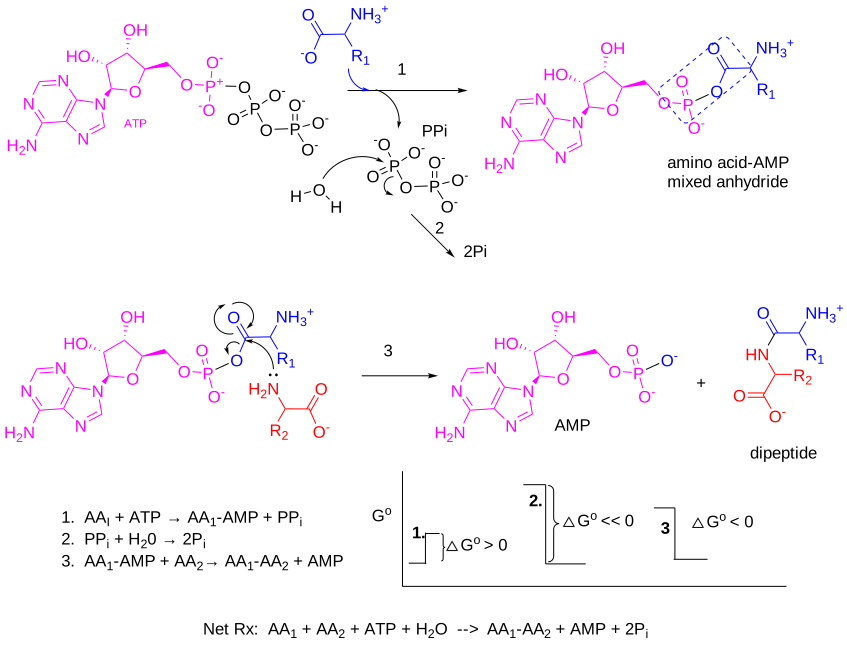
Figure \(\PageIndex{4}\): Individual and net reactions for the formation of a dipeptide from separate amino acids coupled with the cleavage of ATP. f
In the first reaction, the carboxylic acid end of amino acid 1 is activated to form a mixed carboxylic ester. The leaving group, Pi, is hydrolyzed in reaction 2 to help drive the reaction. An amide bond is formed in reaction 3, with the expulsion of an excellent leaving group, AMP. Phosphorylation reactions using ATP are nucleophilic substitution reactions that proceed through a pentavalent transition state. These reactions are also called phosphoryl transfer reactions.
One last note. ATP exists in cells as just one member of a pool of adenine nucleotides which consists of not only ATP but also ADP and AMP (along with Pi). These constituents are readily interconvertible. We break down an amount of ATP each day equal to our body weight. Likewise, we make about the same amount from the turnover products. When energy is needed, carbohydrates and lipids are oxidized and ATP is produced, which can then be immediately used for motility, biosynthesis, etc. It is very important to realize that although ATP is converted to ADP in a thermodynamically spontaneous process, the process is kinetically slow without an enzyme. Hence ATP is stable in solution. However, its biological half-life is not long since it is used very quickly as described above. This recapitulates a theme we have seen before. Many reactions (like oxidation with dioxygen, denaturation of proteins in nonpolar solvent, and now ATP hydrolysis) are thermodynamically favored but kinetically slow. This kinetic slowness is a necessary but of course insufficient condition, for life.
Introduction to Active Transport
We have previously discussed how chemical potential energy in the form of reduced organic molecules can be transduced into the chemical potential energy of ATP. This ATP can be used to drive reductive biosynthesis and movement (from individual cells to whole organisms). ATP has two other significant uses in the cell.
Active Transport: Molecules must often move across membranes against a concentration gradient - from low to high chemical potential - in a process characterized by a positive ΔG. As protons could be "pumped" across the inner mitochondrial membrane against a concentration gradient, powered by the ΔG associated with electron transport (passing electrons from NADH to dioxygen), other species can cross membranes against a concentration gradient - a process called active transport - if coupled to ATP hydrolysis or the collapse of another gradient. Remember that active transport is different from facilitated diffusion we studied earlier, which occurs down a concentration gradient across the membrane. Many such species must be transported into the cell or intracellular organelles against a concentration gradient as illustrated in Figure \(\PageIndex{5}\):
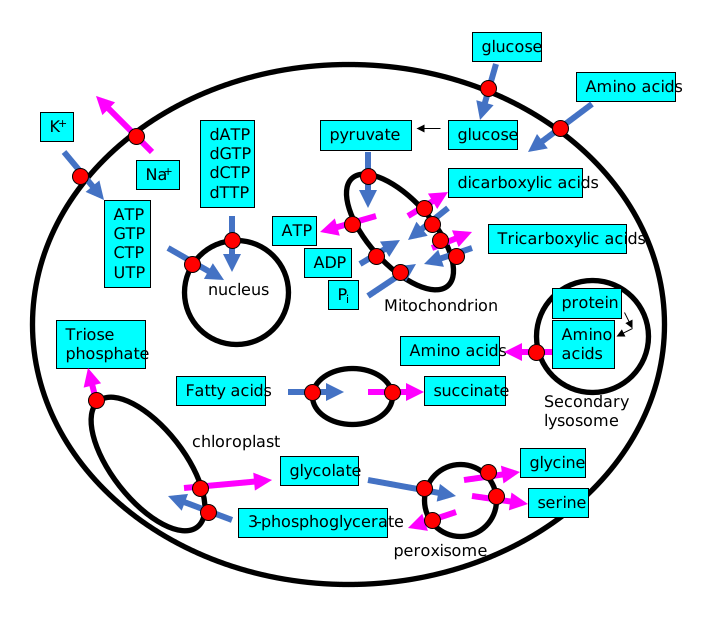
Figure \(\PageIndex{5}\): Examples of active transport reactions (source unfortunately lost)
Signal Transduction: All cells must know how to respond to their environment. They must be able to divide, grow, secrete, synthesize, degrade, differentiate, cease growth, and even die when the appropriate signal is given. This signal invariably is a molecule that binds to a receptor, typically on the cell surface. (Exceptions include light transduction in retinal cells when the signal is a photon and lipophilic hormones which pass through the membrane.) Binding is followed by shape changes in transmembrane protein receptors which effectively transmits the signal into the cytoplasm. We will discuss two main types of signal transduction pathways:
- nerve conduction, in which a presynaptic neuron releases a neurotransmitter causing a postsynaptic neuron to "fire";
- signaling at the cell surface which leads to the activation of kinases within the cytoplasm;
We will discuss signal transduction in the final two chapters.
For active transport to occur, a membrane receptor is required which recognizes the ligand to be transported. Of major interest to us, however, is the energy source used to drive transport against a concentration gradient. The biological world has adapted to use almost any source of energy available.
Energy released by oxidation: We have already encountered the active transport of protons driven by oxidative processes. In electron transport in respiring mitochondria, NADH is oxidized as it passes electrons to a series of mobile electron carriers (ubiquinone, cytochrome C, and eventually dioxygen) using Complex 1, 3, and 4 in the inner membrane of the mitochondria. Somehow the energy lost in this thermodynamically favored process was coupled to conformational changes in the complex which caused protons to be ejected from the matrix into the inner membrane space. One can imagine a series of conformation-sensitive pKa changes in various side chains in the complexes which lead in concert to the vectorial discharge of protons.
ATP hydrolysis: One would expect that this ubiquitous carrier of free energy would be used to drive active transport. This is one of the predominant roles of ATP in the biological world. 70% of all ATP turnover in the brain is used for the creation and maintenance of a Na and K ion gradient across nerve cell membranes using the membrane protein Na+/K+ ATPase.
Light: Photosynthetic bacteria have a membrane protein called bacteriorhodopsin which contains retinal, a conjugated polyene derived from beta-carotene. It is analogous to the visual pigment protein rhodopsin in retinal cells. Absorption of light by the retinal induces a conformation change in the retinal and protein, which leads to the vectorial discharge of protons ;
Collapse of an ion gradient: The favorable collapse of an ion gradient can be used to drive the transport of a different species against a concentration gradient. We have already observed that the collapse of a proton gradient across the inner mitochondria membrane (through FoF1ATP synthase) can drive the thermodynamically unfavored synthesis of ATP. The collapse of a proton gradient provides a proton-motive force that can drive the active transport of sugars. Likewise, a sodium-motive force can drive the active transport of metal ions. Since the energy to make the initial ion gradients usually comes from ATP hydrolysis, ATP indirectly powers the transport of the other species against a gradient.
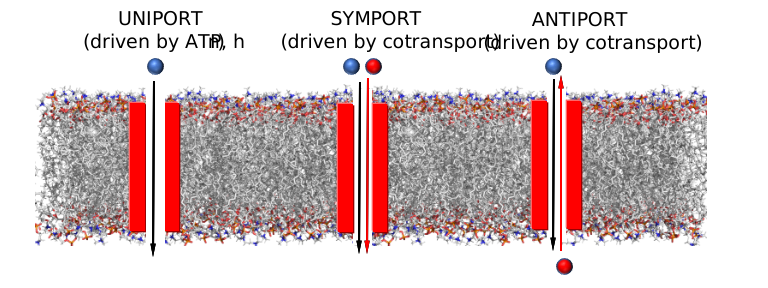
Often, the transport of one species is coupled to transport of another. If the species are charged, a net change in charge across the membrane may occur. Several terms are used to describe various types of transport, as we saw previously in Chapter 12, and which are illustrated in Figure \(\PageIndex{6}\).
- symport - two species are cotransported in the same direction by the same transport protein
- antiport - two species are cotransported in opposite directions by the same transport protein
- electrogenic - a net electrical imbalance is generated across the membrane by symport or antiport of charged species
- electroneutral - no net electrical imbalance is generated across the membrane by symport or antiport of charged species